Are Lupines Toxic to Dogs? What the ASPCA and Vets Say
Yes — lupines are toxic to dogs.
The ASPCA lists lupine as toxic to dogs. Lupines contain quinolizidine alkaloids, most concentrated in the seeds and pods. Dogs may develop mild stomach upset, while severe neurological signs are documented mainly in livestock — but there is no established safe amount for dogs and no antidote, so any dog that eats lupine should be checked by a veterinarian.


- Item
- Lupines
- Scientific name
- Lupinus spp.
- Also called
- Lupin, Bluebonnet, Texas bluebonnet
- Category
- Plants
- Verdict
- Toxic
- Symptoms start
- Onset time in dogs is not established — the sources we checked do not give a time frame for lupine signs in dogs. Merck notes that in severe mycotoxic lupinosis outbreaks in livestock, deaths occur in 2 to 14 days, but that is a different, fungal condition in livestock, not a dog onset time, so we do not state one here.
Yes, lupines are toxic to dogs. The ASPCA lists lupine (Lupinus spp.) as toxic, and Pet Poison Helpline says lupines — including the Texas bluebonnet — contain toxic alkaloids. Dogs and cats may develop mild stomach upset, while the severe neurological signs are documented in grazing livestock that eat large amounts.
The picture for dogs is less clear-cut than the listing suggests. WagWalking notes that toxicity has been predominantly seen in livestock and that a large amount is typically needed before a dog is poisoned. But there is no established safe amount for dogs, the seeds and pods are the most dangerous parts, and there is no antidote — so any dog that eats lupine needs a veterinarian's check.
If your dog ate it — what to do now
- Move your dog away from the lupine and remove the plant, seed pods, or beans so your dog cannot eat more.
- Call your veterinarian or the ASPCA Animal Poison Control Center at (888) 426-4435 (a consultation fee may apply) and describe which part your dog ate, roughly how much, and when.
- Keep a photo or a sample of the plant, including any seed pods, so the plant can be identified.
- If your dog is trembling, having convulsions, or struggling to breathe, go to a veterinary clinic at once — treat it as an emergency.
Do not do this
- Do not induce vomiting unless a veterinarian tells you to.
- Do not give activated charcoal, milk, food, or home remedies unless a veterinarian tells you to.
- Do not wait for symptoms to appear before calling — call your veterinarian or ASPCA Animal Poison Control right away.
- Do not let your dog keep eating lupine, graze the plant, or pick up seed pods.
What makes lupines toxic to dogs?
Lupines contain quinolizidine alkaloids, a group of bitter plant chemicals that includes lupinine, lupanine, sparteine, and anagyrine, along with piperidine alkaloids such as ammodendrine. Cornell lists lupinine, anagyrine, sparteine, and hydroxylupanine as the primary poisons in Lupinus species. These alkaloids affect the nervous system and the liver, which is why the signs range from stomach upset to tremors and breathing trouble.
Moldy lupine carries a second, separate danger. The Merck Veterinary Manual describes mycotoxic lupinosis, a liver disease caused by the fungus Phomopsis leptostromiformis growing on lupine stems, pods, and dead plant material, especially after rain.
- Toxic compounds: quinolizidine alkaloids — lupinine, lupanine, sparteine, anagyrine — plus piperidine alkaloids such as ammodendrine.
- Most dangerous parts: seeds and pods, then young leaves and new spring growth.
- Moldy lupine can also carry a fungus that causes mycotoxic lupinosis, a liver condition.
How much lupine is dangerous for dogs?
No toxic dose for lupine in dogs has been established. No source gives an amount in mg/kg or a number of seeds, so there is also no established safe dose. What matters most is the part eaten: alkaloid levels are highest in young plants and in mature seeds, and the seeds and pods are the most dangerous parts.
For scale, the USDA notes that cattle may be poisoned by eating 0.5 to 1.0 kg of lupine, and smaller amounts are poisonous if cattle eat lupine daily for 3 to 7 days. That is livestock data, not a dog dose. WagWalking notes a large amount is typically needed before a dog is poisoned, but puppies are more vulnerable because of their lower body weight.
- No toxic dose in mg/kg is established for dogs.
- Seeds and pods are the most dangerous parts; young plants are more toxic than older ones.
- Alkaloids survive drying, so lupine hay stays toxic.
- Sweet lupins are bred low in alkaloids; bitter types are higher.
Symptoms of lupine poisoning in dogs
In dogs, Pet Poison Helpline expects mild gastrointestinal upset — vomiting and diarrhea. The severe signs come from livestock poisoning, where lupine is a well-documented killer of sheep and cattle. WagWalking lists the rest: loss of coordination and appetite, difficulty breathing, nervousness, frothing at the mouth, lethargy, muscle twitching, convulsions, head pressing, jaundice, and respiratory paralysis.
Do not wait for the severe signs. They are documented mainly in livestock, and no source establishes which occur in dogs — but that gap is a reason to call a vet early, not to assume a dog will be fine. Tremors, convulsions, trouble breathing, or collapse after any lupine eating is an emergency.
- Vomiting
- Diarrhea
- Loss of appetite
- Drooling or frothing at the mouth
- Lethargy
- Nervousness
- Loss of coordination
- Muscle twitching
- Difficulty breathing
- Convulsions
- Head pressing
- Jaundice
- Respiratory paralysis (severe cases)
What to do if your dog eats lupine
Move your dog away from the lupine and remove the plant, seed pods, or beans so your dog cannot eat more. Then call your veterinarian or the ASPCA Animal Poison Control Center at (888) 426-4435 right away — do not wait for symptoms, because there is no established safe amount. Tell them which part your dog ate, roughly how much, and when it happened. There is no antidote: the USDA states there is no known treatment, and care is supportive — a vet may induce vomiting if it is safe and early enough, give IV fluids, and treat seizures and other symptoms as they appear. Keep a photo or a sample of the plant for identification.
- Move your dog away and remove the plant or seed pods so your dog cannot eat more.
- Call your vet or ASPCA Animal Poison Control at (888) 426-4435 (a consultation fee may apply).
- Tell them which part your dog ate, how much, and when.
- Keep a photo or a sample of the plant for identification.
How to keep your dog safe around lupines
Do not plant lupines where your dog roams unsupervised. If they are already planted, fence the bed off or use a raised bed your dog cannot reach, and remove seed pods before they mature — the pods are the most dangerous part.
Lupine alkaloids are not lost on drying, so lupine hay stays toxic, and moldy lupine stems and pods can carry the fungus that causes mycotoxic lupinosis. Throw out moldy lupine material, and store lupini beans and seed packets like medicine, out of reach.
- Fence off lupine beds, or plant lupines out of your dog's reach.
- Remove seed pods before they mature.
- Keep your dog from grazing wild lupine or bluebonnets on walks.
- Check hay and mulch for lupine material, and throw out moldy stems and pods.
- Store lupini beans and seed packets out of reach.
Lupine products and forms: garden plants, wild lupine, hay, and lupini beans
Garden lupines — usually Russell hybrids or Lupinus polyphyllus — carry the same alkaloid risk as wild lupines, though levels vary between species and plants. Wild lupines and Texas bluebonnets are the same genus and risk, and the form a dog is most likely to meet on a walk.
Lupini beans deserve a separate warning because they look like food. The beans sold for people are soaked and cooked to remove alkaloids, but raw or undercooked beans still contain them, and whole beans are a choking hazard for small dogs. They are not a dog food — do not feed them to a dog without a veterinarian's approval. Moldy lupine is a different hazard: a fungus grows on dead stems and pods after rain and causes mycotoxic lupinosis, a liver disease.
- Garden lupine: Russell hybrids and Lupinus polyphyllus — toxic, keep fenced off.
- Wild lupine and bluebonnet: the same alkaloids and risk, on walks and rangeland.
- Dried lupine and hay: alkaloids survive drying.
- Lupini beans: raw or undercooked beans contain alkaloids; do not feed them to dogs.
- Moldy lupine: can carry a fungus that causes liver damage.
Safe alternatives to lupines
Love the tall flower spike look? Choose a safe one. Sunflowers give the same bold, tall presence and are ASPCA non-toxic. Zinnias are a bright, easy summer flower, also ASPCA non-toxic. Roses are the classic swap for bouquets and beds, and also ASPCA non-toxic.
For the wildflower-meadow look, black-eyed Susans are a good stand-in: not on the ASPCA toxic list, blooming all summer alongside the same grasses lupines grow with. The same garden rules apply either way: pet-safe sprays, no cocoa-shell mulch, and slug bait stored out of reach.
- Sunflowers: ASPCA non-toxic, and just as tall and bold.
- Zinnias: ASPCA non-toxic, and a bright, easy summer flower.
- Roses: ASPCA non-toxic, and a classic for beds and bouquets.
Symptoms to watch for
- Vomiting
- Diarrhea
- Loss of appetite
- Drooling or frothing at the mouth
- Lethargy
- Nervousness
- Loss of coordination
- Muscle twitching
- Difficulty breathing
- Convulsions
- Head pressing
- Jaundice (yellowing of the gums or eyes)
- Respiratory paralysis (in severe cases)
Pet Poison Helpline says dogs and cats may develop mild gastrointestinal upset; the severe neurological signs (loss of coordination, twitching, convulsions, breathing trouble, jaundice) are documented mainly in grazing livestock, and a large amount is typically needed before toxicity occurs in dogs. No source establishes which severe signs occur in dogs or at what amount — call a veterinarian early rather than waiting to see them.
Safe alternatives
- Sunflowers — Listed as non-toxic to dogs by the ASPCA, and a tall flower with the same bold garden presence.
- Zinnias — Listed as non-toxic to dogs by the ASPCA, and a bright, easy flower for beds and borders.
- Roses — Listed as non-toxic to dogs by the ASPCA, and a classic choice for bouquets and garden beds.
What about cats? Lupine is also listed as toxic by the ASPCA, and Pet Poison Helpline says cats, like dogs, may develop mild gastrointestinal upset after eating lupines. The severe neurological signs and reproductive disorders are documented in grazing livestock, not in cats. Keep cats away from lupine beds and seed pods, and call your veterinarian if a cat vomits repeatedly or seems unwell after eating any part of the plant.
Frequently asked questions
Are lupines toxic to dogs?
Yes. The ASPCA lists lupine (Lupinus spp.) as toxic to dogs, and Pet Poison Helpline says lupines contain toxic alkaloids. Dogs and cats may develop mild stomach upset, while the severe neurological signs are documented mainly in grazing livestock. Treat any eating seriously and call your veterinarian.
How much lupine is dangerous for a dog?
There is no established toxic dose for dogs. The seeds and pods hold the highest alkaloid levels, followed by young leaves and new spring growth. WagWalking notes that a large amount is typically needed before toxicity occurs in dogs, but that is not a safe amount — do not wait for symptoms before calling your veterinarian.
Are lupini beans safe for dogs?
No. Raw or undercooked lupini beans contain the same alkaloids as the plant, and even prepared beans are a choking hazard for small dogs. Lupini beans sold for people are soaked and cooked to remove alkaloids, but they are not a dog food — do not feed them to your dog without asking your veterinarian first.
My dog ate a lupine flower — what should I do?
Call your veterinarian or the ASPCA Animal Poison Control Center at (888) 426-4435 right away, even if your dog seems fine. Do not wait for symptoms to appear. Tell them which part your dog ate, roughly how much, and when, and keep a photo or sample of the plant.
Sources
- ASPCA Poison Control — Lupine
- Pet Poison Helpline — Bluebonnet Is Toxic To Dogs
- Merck Veterinary Manual — Plants Poisonous to Animals
- USDA ARS Poisonous Plant Research Laboratory — Lupine (Lupinus spp.)
- WagWalking — Lupine Poisoning in Dogs
Related guides

The ASPCA lists azaleas (Rhododendron spp.) as toxic to dogs, cats, and horses. Every part of the plant contains grayanotoxins, and even a few leaves can cause vomiting, weakness, and dangerous heart effects.

Lilies can poison dogs, usually causing vomiting, diarrhea, and drooling. True lilies are far more dangerous to cats, where they can cause fatal kidney failure. If your dog eats any lily, call your vet.

Tulips are toxic to dogs. Every part of the plant contains tulipalin A and B, but the bulb holds the highest concentration, so a dog that digs up and eats bulbs faces the greatest risk.
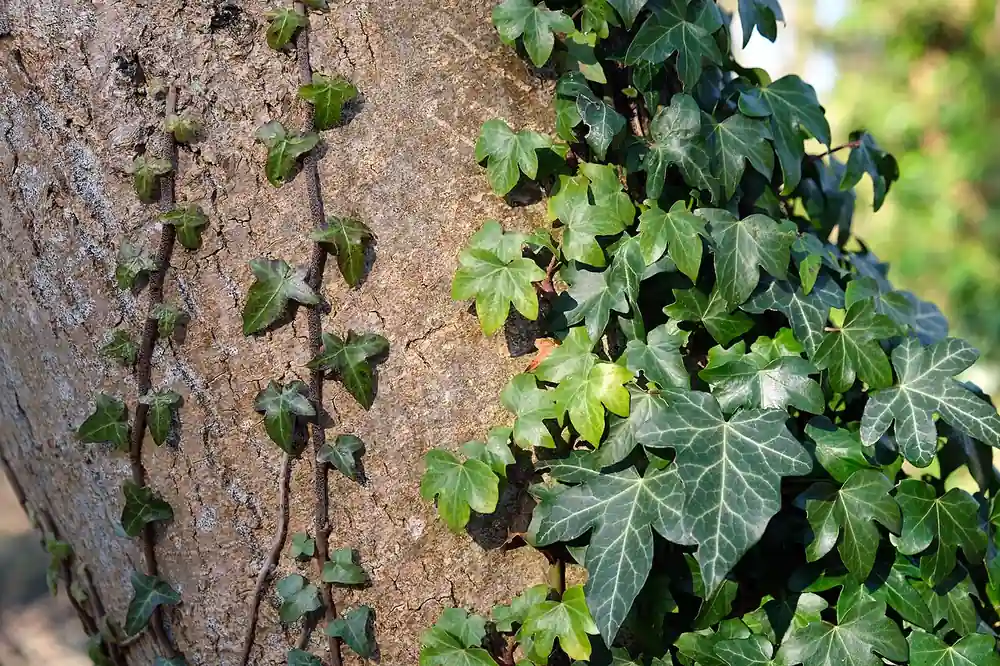
The ASPCA lists English ivy as toxic to dogs. Its leaves contain triterpenoid saponins that cause vomiting, abdominal pain, drooling, and diarrhea. Pet Poison Helpline rates the toxicity as mild, but any dog that eats it should be checked by a veterinarian.