Are Dahlias Toxic to Dogs? Mild Toxicity, Symptoms, and What to Do
Yes — dahlias are mildly toxic to dogs.
Dahlias are mildly toxic to dogs. The ASPCA lists Dahlia species as toxic, with mild stomach upset and mild skin irritation as the expected effects — not organ damage.

- Item
- Dahlias
- Scientific name
- Dahlia spp.
- Also called
- Dahlia, Garden dahlia
- Category
- Plants
- Verdict
- Toxic (Mild)
- Symptoms start
- Onset time is not well established for dahlias. The ASPCA does not give a time frame for when signs appear, so watch your dog closely for the first 24 hours after it eats any part of a dahlia.
Yes, dahlias are mildly toxic to dogs. The ASPCA lists Dahlia species as toxic to dogs, cats, and horses, and the clinical signs it records are mild gastrointestinal signs and mild dermatitis. That puts dahlias at the mild end of the garden danger scale: a dog that chews one is likely to end up with an upset stomach or itchy skin, not organ damage.
Dahlias are among the most popular summer and fall garden flowers in the United States, grown for large, showy blooms in almost every color. They grow from tubers planted in spring, flower from midsummer until the first frost, and are often dug up and stored over winter, which gives a digging dog several chances to find them. This page explains what makes dahlias toxic, how much is dangerous, the symptoms to watch for, and what to do if your dog eats one.
If your dog ate it — what to do now
- Take the dahlia away so your dog cannot eat more.
- Note which part your dog ate and how much, and save a piece or a photo for the veterinarian.
- Rinse any sap or plant material off your dog's skin gently with water.
- Call your veterinarian or the ASPCA Animal Poison Control Center at (888) 426-4435 right away (a consultation fee may apply). Do not wait for symptoms to appear if your dog ate a large amount.
- Follow the veterinarian's advice, which may include bringing your dog in for examination and supportive care.
- Watch your dog closely for the first 24 hours and report any vomiting, diarrhea, drooling, or lethargy to the veterinarian.
Do not do this
- Do not induce vomiting unless a veterinarian tells you to.
- Do not give milk, food, oil, or home remedies to "dilute" the toxin.
- Do not wait to see if symptoms develop before calling for advice if your dog ate a large amount.
- Do not assume a small nibble is harmless if your dog is a puppy, very small, elderly, or already unwell.
What makes dahlias toxic to dogs?
Dahlias (Dahlia spp.) belong to the Compositae family, the same large plant family as daisies, chrysanthemums, and sunflowers. The ASPCA lists the toxic principle for dahlias as unknown, which means researchers have not identified a single compound responsible for the poisoning. What is known is how the plant acts: it irritates the lining of the mouth and stomach when chewed or swallowed, and it can irritate the skin where it touches it.
That irritation is the whole picture the ASPCA records: only two clinical signs, mild gastrointestinal signs and mild dermatitis. Nothing in the listing points to liver, kidney, heart, or nervous system effects, which is what separates dahlias from the garden plants veterinarians genuinely worry about, such as sago palm, oleander, or autumn crocus.
Some websites claim dahlias are non-toxic, which contradicts the ASPCA listing. This page follows the more cautious verdict: treat dahlias as mildly toxic, and do not let your dog eat them.
- Flowers and petals: the part most often nibbled, and the least concerning, though still not safe to eat.
- Leaves and stems: can irritate the mouth and stomach when chewed, and the sap can irritate skin.
- Tubers: the underground storage roots, dug up in fall and replanted in spring, and the part a digging dog is most likely to find.
How much dahlia is dangerous for a dog?
There is no established safe dose for dahlias, and no published toxic dose in milligrams per kilogram of body weight. That means no amount is known to be safe, and the risk depends on how much was eaten, which part, and your dog's size. A small dog that eats a mouthful of leaves or tuber is at greater risk than a large dog that nibbles a single petal.
In practice, a small nibble often causes no symptoms, or a single bout of vomiting. A larger amount is more likely to bring on repeated vomiting, diarrhea, and a loss of appetite. Puppies are more sensitive than adult dogs, and they explore the world with their mouths, so watch them closely around dahlia beds.
Do not try to work out a safe number of petals or leaves on your own. If your dog ate a large amount, or you are unsure how much it ate, call your veterinarian for advice rather than guessing.
Symptoms of dahlia poisoning in dogs
The ASPCA lists mild gastrointestinal signs and mild dermatitis as the clinical signs of dahlia poisoning in dogs. In plain terms, that means drooling, vomiting, loose stool, and a loss of appetite, plus red, itchy skin where the plant touched the dog, often around the muzzle, belly, or paws.
Mild cases usually pass on their own. Call your veterinarian instead of waiting if vomiting keeps going for hours, diarrhea has blood in it, your dog refuses water or vomits every time it drinks, or it becomes lethargic or weak. A swollen, tight, or painful belly also needs veterinary attention right away.
What to do if your dog eats dahlias
Stay calm and act quickly. Take the dahlia away so your dog cannot eat more, and note which part was eaten and roughly how much. Take a photo of the plant, or save a piece of it, to help the veterinarian identify it. If your dog has sap or plant material on its skin, rinse the area gently with water.
Call your veterinarian or the ASPCA Animal Poison Control Center at (888) 426-4435 for advice. A consultation fee may apply. Describe what your dog ate and how much, and whether it is showing any symptoms. Your veterinarian may advise monitoring at home, or may ask you to bring your dog in, depending on the amount eaten and your dog's size and health.
Watch your dog closely for the first 24 hours; mild signs should fade over that time. If vomiting or diarrhea is still going after a day, or your dog becomes lethargic or refuses food and water, call your veterinarian again.
How to keep your dog safe from dahlias
Dahlias show up in three places: the garden bed, the house as cut flowers, and the shed or garage where tubers are stored over winter. In the garden, a digging dog can unearth tubers at planting time in spring or when they are lifted in fall. Indoors, a bouquet puts flowers and stems at nose height for a curious dog.
Plant dahlias in beds your dog cannot reach, or fence off the bed during planting and lifting season. Store tubers in closed containers on high shelves. Keep cut bouquets out of reach, and ask the florist to leave dahlias out of mixed bouquets if you have a dog. Teach a reliable "leave it" cue, and supervise your dog in the yard when fresh growth or newly planted tubers are most tempting.
- Fence off dahlia beds, especially while tubers are being planted or dug up.
- Store lifted tubers in closed containers on a high shelf, never in a pile on the floor.
- Keep cut dahlia stems and bouquets out of reach.
- Supervise digging dogs in the garden in spring and fall.
Safe alternatives to dahlias
If you want big, showy summer color without the risk, choose flowers the ASPCA lists as non-toxic to dogs. Roses are a classic choice for bouquets and garden beds, and sunflowers give you the same tall, bold summer display as dahlias with no toxicity. Spider plants give you greenery indoors without the dahlia risk.
Remember that "non-toxic" does not mean "food": eating any plant material can cause vomiting and stomach upset in dogs, so even a safe plant should not become a snack. But a dog that chews a rose petal or a sunflower leaf is not facing dahlia poisoning.
How to identify dahlias in your home and garden
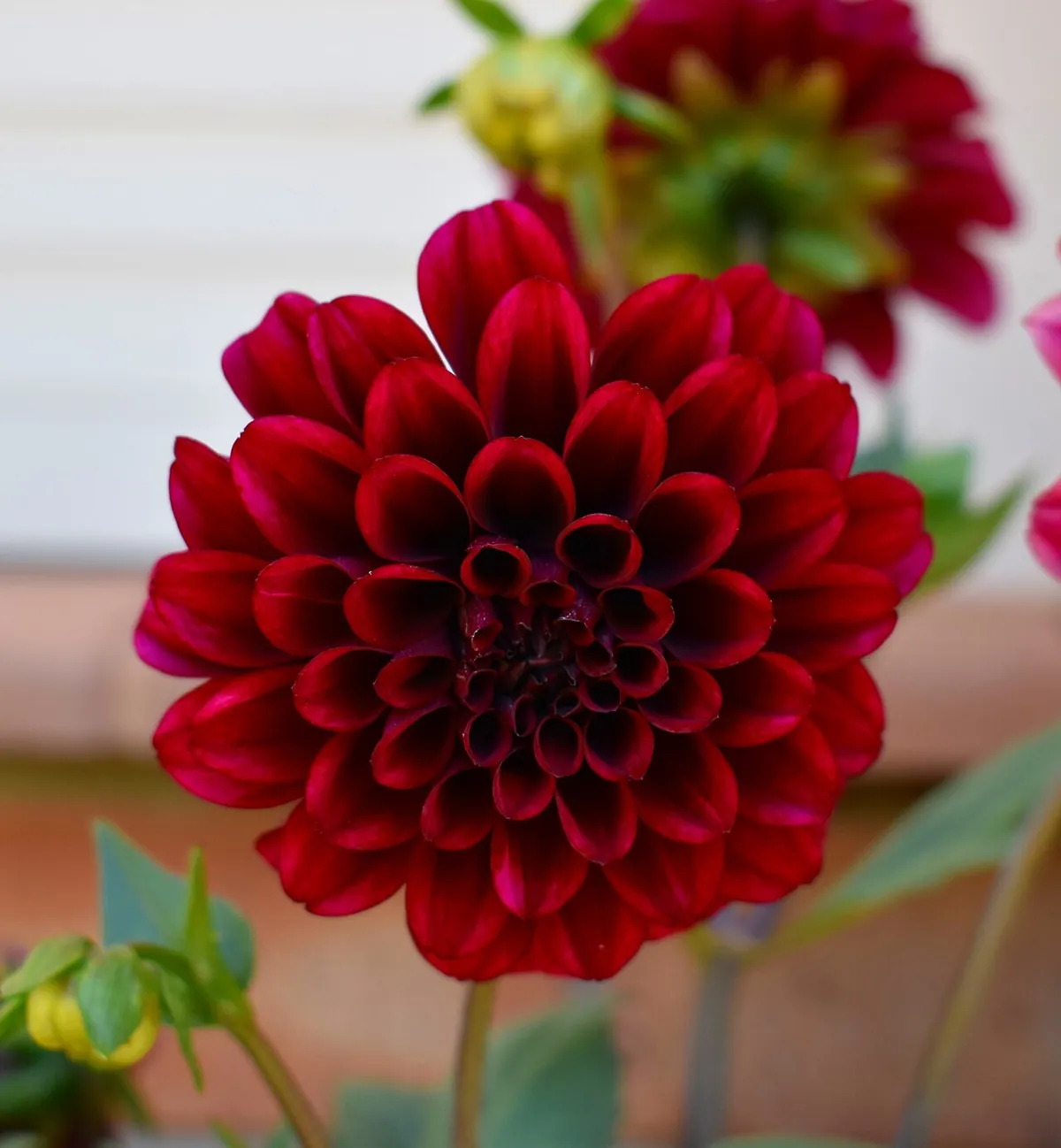
Dahlias are easy to recognize in bloom: large, layered flowers in almost every color except blue, on sturdy stems with dark green, toothed leaves. Blooms range from small pompons the size of a golf ball to dinner-plate flowers a foot across, and they flower from midsummer until the first frost.
Out of bloom they are harder to spot, which is part of the risk. The plant grows from a cluster of tubers that look like fat, brown, finger-shaped roots joined at a central stem. Gardeners dig these up in fall, store them over winter, and replant them in spring. If your dog is digging where tubers were recently planted or stored, or chewing something that looks like a cluster of brown roots, treat it as a possible dahlia eating and call your veterinarian.
Symptoms to watch for
- Vomiting
- Diarrhea or loose stool
- Excessive drooling
- Loss of appetite
- Mild dermatitis (red, itchy skin)
- Abdominal pain
- Lethargy (if a large amount was eaten)
Mild cases usually show only drooling, a single bout of vomiting, or itchy skin, and the signs fade within about a day; persistent vomiting, bloody diarrhea, or lethargy need a veterinarian.
Safe alternatives
- Roses — Listed as non-toxic to dogs by the ASPCA, and a classic choice for bouquets and garden beds.
- Sunflowers — Listed as non-toxic to dogs by the ASPCA, and a tall, showy summer flower like dahlias.
- Spider plants — Listed as non-toxic to dogs by the ASPCA, and an easy, hardy plant for indoors.
What about cats? Dahlias are toxic to cats as well as dogs. The ASPCA lists the same clinical signs for cats: mild gastrointestinal signs and mild dermatitis. Keep dahlias away from cats too, and call your veterinarian if a cat has eaten any part of one.
Frequently asked questions
Can dogs eat dahlia petals?
No. Petals are the least concerning part, but they still belong to a plant the ASPCA lists as toxic to dogs. A nibble on a petal may cause no symptoms at all, or a bout of drooling or vomiting. Do not let your dog make a habit of eating dahlia flowers.
Are dahlia tubers poisonous to dogs?
The ASPCA does not single out the tuber, and its listing covers Dahlia species as a whole. Tubers are the part a digging dog is most likely to unearth and chew, and a large, starchy chunk of any plant material can be hard on a dog's stomach. Treat a dog that has eaten tuber pieces the same way as any other dahlia eating: remove the rest, watch for symptoms, and call your veterinarian if you are unsure.
Why are dahlias toxic to dogs?
The ASPCA lists the toxic principle for dahlias as unknown, which means no single compound has been identified as the cause. The plant irritates the mouth, stomach, and skin rather than damaging organs, which is why the expected signs are mild stomach upset and mild skin irritation.
My dog ate a dahlia — what should I do?
Take the dahlia away, note how much your dog ate and which part, and watch for vomiting, diarrhea, drooling, or itchy skin. Call your veterinarian or the ASPCA Animal Poison Control Center at (888) 426-4435 if your dog ate a large amount, if symptoms are severe or last more than a day, or if your dog is a puppy, very small, elderly, or already unwell.
Sources
- ASPCA Poison Control — Dahlia
- ASPCA Poison Control — Toxic and Non-Toxic Plant List — Dogs
- Plant Addicts — Are Dahlias Poisonous?
Related guides
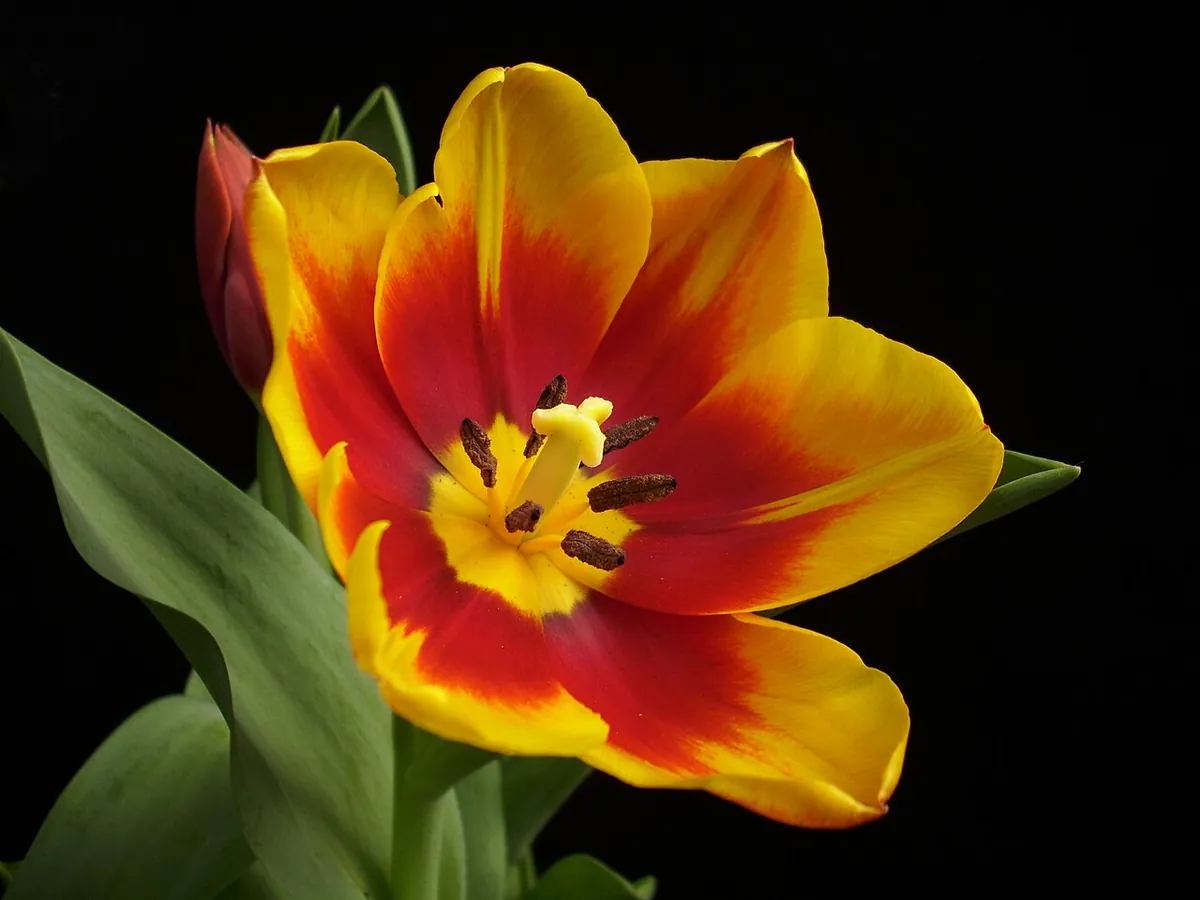
Tulips are toxic to dogs. Every part of the plant contains tulipalin A and B, but the bulb holds the highest concentration, so a dog that digs up and eats bulbs faces the greatest risk.
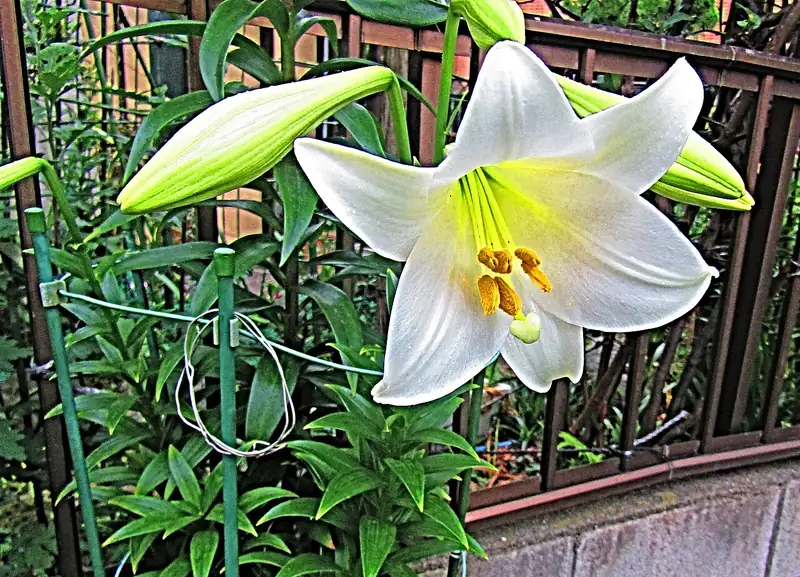
Lilies can poison dogs, usually causing vomiting, diarrhea, and drooling. True lilies are far more dangerous to cats, where they can cause fatal kidney failure. If your dog eats any lily, call your vet.
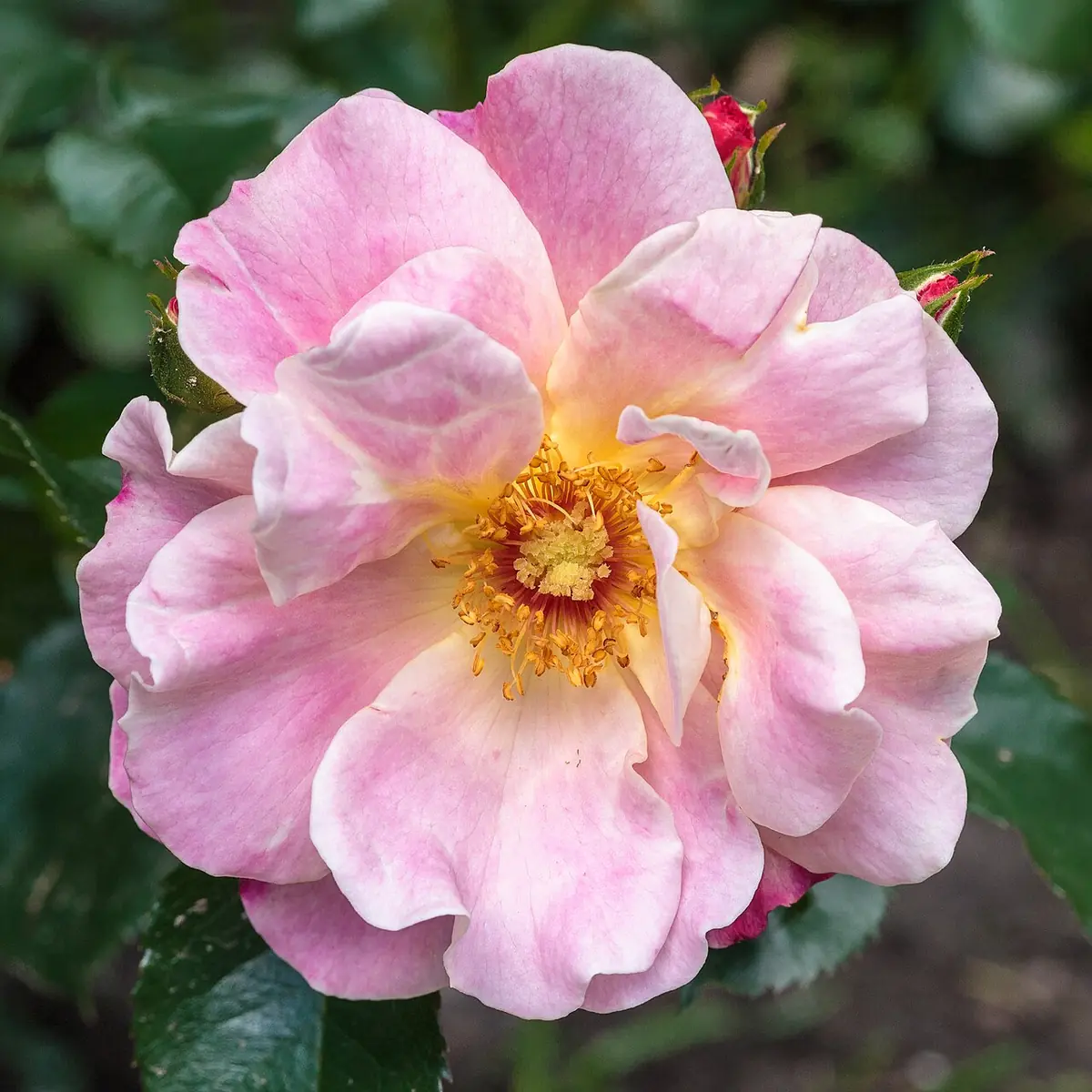
The ASPCA lists roses (Rosa species) as non-toxic to dogs, cats, and horses. The real risks are the thorns and any pesticides, fertilizers, or flower food on the plant.

Sunflowers are not toxic to dogs. The ASPCA lists them as non-toxic, and the seeds are safe too — but only plain, shelled, and unsalted, in small amounts.