Are Elephant Ears Toxic to Dogs? Symptoms, Risks, and What to Do
Yes — elephant ears are toxic to dogs.
Elephant ears are toxic to dogs. They contain insoluble calcium oxalate crystals that cause intense mouth pain, heavy drooling, swelling, and difficulty swallowing — a more serious plant than the mild garden flowers.


- Item
- Elephant Ears
- Scientific name
- Alocasia spp., Colocasia spp., Caladium spp. and Xanthosoma spp.
- Also called
- Elephant Ear, Taro, Caladium, African Mask Plant
- Category
- Plants
- Verdict
- Toxic
- Symptoms start
- Symptoms usually begin within minutes of chewing an elephant ear, because the crystals injure the mouth on contact. Veterinary toxicology references give an onset of minutes to hours, so watch your dog closely for the first few hours and through the first 24 hours after it chews any part of the plant.
Yes, elephant ears are toxic to dogs — and this is a more serious plant than the mild ones. "Elephant ear" is a common name for several genera in the arum family (Araceae): Alocasia, Colocasia, Caladium, and Xanthosoma. All contain insoluble calcium oxalate crystals, and chewing any part releases needle-shaped crystals that stab into the mouth, lips, and tongue, causing intense burning pain, drooling, swelling, and difficulty swallowing.
Elephant ears are popular houseplants and garden plants across the United States, grown for huge, dramatic leaves that can reach a meter long. Indoors they sit in pots at floor level; outdoors they fill shady beds and pond edges, and dogs can dig up their corms. This page explains what makes them toxic, how much is dangerous, the symptoms to watch for, and what to do if your dog eats one.
If your dog ate it — what to do now
- Take the elephant ear away so your dog cannot eat more.
- Note which part your dog ate and how much, and save a piece or photo for the veterinarian.
- Gently rinse your dog's mouth with clean water if you can do it safely, and offer fresh water.
- Call your veterinarian or the ASPCA Animal Poison Control Center at (888) 426-4435 right away (a consultation fee may apply). Do not wait for symptoms to appear.
- Follow the veterinarian's advice, which may include pain relief, anti-inflammatory treatment, and fluids.
- Watch your dog closely for 24 hours and get emergency care immediately if swelling worsens or breathing becomes difficult.
Do not do this
- Do not induce vomiting unless a veterinarian tells you to — vomit can carry crystals back through an injured mouth and throat.
- Do not force water deep into your dog's throat when rinsing.
- Do not give milk, food, oil, or home remedies to "dilute" the toxin.
- Do not wait for symptoms to develop before calling — call right away, and treat any swelling or trouble breathing as an emergency.
What makes elephant ears toxic to dogs?
Elephant ears belong to the arum family (Araceae), the same family as pothos, philodendron, monstera, and peace lily. Their toxic principle is insoluble calcium oxalate crystals, packed as bundles of needle-shaped crystals called raphides in specialized plant cells. When a dog chews, bites, or crushes the plant, those cells burst and the needles are driven into the mouth and throat.
The crystals pierce the tissue and are thought to help other irritants in the sap, such as proteolytic enzymes, reach the injured tissue and trigger inflammation. That is why the pain is immediate and intense. The ASPCA's listing under the name "Elephant Ears" covers Caladium (Caladium hortulanum); Pet Poison Helpline's page covers Alocasia, Caladium, Colocasia, and Xanthosoma together. Every part of the plant is toxic, and no genus sold as an elephant ear is safe to chew.
- Leaves: the huge, arrow- or heart-shaped leaves a dog is most likely to chew.
- Stems and petioles: the long stalks holding the leaves, carrying the same crystals.
- Corms and roots: the starchy underground organs a digging dog can unearth; raw taro corms are toxic, though cooked taro is eaten by people.
How much elephant ear is dangerous for a dog?
There is no established safe dose for elephant ears, and no published toxic dose in milligrams per kilogram of body weight. No amount is known to be safe, and the risk depends on how much was eaten and your dog's size: a small dog that eats a mouthful of leaf is at greater risk than a large dog that takes one bite.
In practice, the plant defends itself: the burning pain usually makes a dog drop the leaf after one bite, limiting how much it swallows. Do not rely on that. A puppy that does not know better, a dog chewing a fallen leaf, or a digging dog that eats a corm can take in far more. Puppies and small dogs are more sensitive, and any dog that swallows a large amount faces worse swelling and vomiting. If your dog chewed an elephant ear at all, call your veterinarian rather than guessing.
Symptoms of elephant ear poisoning in dogs
The ASPCA lists oral irritation, burning of the mouth, lips, and tongue, drooling, vomiting, and difficulty swallowing as the signs of elephant ear poisoning in dogs. Pet Poison Helpline adds oral pain, poor appetite, and retching. In plain terms, a dog that has chewed an elephant ear will usually start drooling heavily within minutes, paw at its mouth, and refuse food and water.
Most cases stay at that level and improve with care. The sign that turns this into an emergency is swelling: if the lips, tongue, or throat swell enough to make swallowing or breathing difficult, your dog needs veterinary care right away. Pet Poison Helpline notes that swelling of the upper airway is very rare, but it does happen — which is why this plant deserves more respect than the mild garden flowers. Call your veterinarian instead of waiting if vomiting keeps going, your dog cannot swallow, or it refuses water. Difficulty breathing is an emergency.
What to do if your dog eats elephant ears
Stay calm and act quickly. Take the plant away so your dog cannot eat more, and note which part was eaten and roughly how much. Take a photo of the plant, or save a piece of it, to help the veterinarian. If you can do it safely, gently rinse your dog's mouth with clean water — wipe it with a damp cloth, or let water trickle along the side of the mouth. Do not force water deep into the throat, and do not make your dog vomit.
Call your veterinarian or the ASPCA Animal Poison Control Center at (888) 426-4435 right away; a consultation fee may apply. Describe what your dog ate and how much, and whether it is drooling, pawing at its mouth, or having trouble swallowing. Your veterinarian may advise rinsing and monitoring at home, or may ask you to bring your dog in for pain relief, anti-inflammatories, and fluids.
How to keep your dog safe from elephant ears
Elephant ears show up in three places: the house as potted plants, the garden as bedding plants, and the shed or compost pile as corms. Indoors, a large pot on the floor puts huge leaves at exactly a dog's mouth height, and a pet can chew a leaf tip unnoticed. Outdoors, the plants grow fast in warm, wet soil, and a digging dog can unearth a corm.
Keep potted elephant ears up high, on a sturdy stand, or in a room your dog does not enter alone. In the garden, plant them in beds your dog cannot reach, or fence the bed off, especially while corms are being planted. Wear gloves when you handle the plants, and teach a "leave it" cue.
- Keep potted elephant ears on high stands or in rooms your dog cannot enter unsupervised.
- Fence off outdoor elephant ear beds, and supervise digging dogs around them.
- Wear gloves when handling, dividing, or repotting elephant ears — the sap irritates human skin too.
Safe alternatives to elephant ears
If you want big, bold foliage without the risk, choose plants the ASPCA lists as non-toxic to dogs. Spider plants give you arching green-and-white leaves indoors and are safe around dogs. Money trees give you a large-leafed, tropical-looking houseplant with no oxalate risk. Outdoors, roses give you color and structure in the garden bed.
Remember that "non-toxic" does not mean "food": eating any plant material can cause vomiting and stomach upset, so even a safe plant should not become a snack. But a dog that chews a spider plant leaf or a rose petal is not facing the intense mouth pain of an elephant ear.
How to identify elephant ears in your home and garden
Elephant ears are named for their leaves: huge, arrow- or heart-shaped blades, often 30 to 90 cm long, held on long, thick stalks. Alocasia leaves are usually arrow-shaped and held upright, with the stalk joining the leaf at its base; Colocasia (taro) leaves are more heart-shaped and droop, with the stalk joining the leaf's underside. Caladium leaves are smaller and thinner, often brightly colored in pink, red, and white, sold as angel wings or fancy-leaved caladium.
The plants rarely flower indoors; when they do, the flower is a pale, hooded spike behind the leaf stalks. Out of the pot, the plant grows from a starchy corm that looks like a rough, brown, potato-like lump. If your dog is digging where elephant ears were planted, or chewing an arrow-shaped leaf, treat it as a possible elephant ear eating and call your veterinarian.
Symptoms to watch for
- Intense mouth pain and burning
- Drooling
- Pawing at the mouth or face
- Swelling of the lips, tongue, or throat
- Difficulty swallowing
- Vomiting
- Retching
- Loss of appetite
Signs usually start within minutes of chewing, and most dogs improve with supportive care; swelling that affects swallowing or breathing is an emergency and needs a veterinarian right away.
Safe alternatives
- Spider plants — Listed as non-toxic to dogs by the ASPCA, and an easy, hardy indoor plant.
- Roses — Listed as non-toxic to dogs by the ASPCA, and a classic for bouquets and garden beds.
- Money trees — Listed as non-toxic to dogs by the ASPCA, and a popular large-leafed houseplant.
What about cats? Elephant ears are toxic to cats as well as dogs. The ASPCA and Pet Poison Helpline list the same kind of signs for cats: oral pain, drooling, vomiting, and difficulty swallowing. Cats often chew the tips of large houseplant leaves, so keep elephant ears well out of a cat's reach, and call your veterinarian if a cat has chewed one.
Frequently asked questions
Are elephant ears poisonous to dogs, or just irritating?
They are genuinely toxic, not just mildly irritating. Chewing an elephant ear drives needle-shaped calcium oxalate crystals into the mouth, causing immediate, intense pain, drooling, swelling, and difficulty swallowing. Pet Poison Helpline rates the toxicity level for dogs as mild, because most dogs stop chewing after one bite and recover with supportive care — but the pain is real, veterinary care is often needed, and in very rare cases swelling of the upper airway can make breathing difficult.
How much elephant ear is dangerous for a dog?
There is no established safe dose, and no published toxic dose in milligrams per kilogram of body weight. Even one bite can cause intense mouth pain and drooling. The pain usually makes a dog drop the plant after one bite, which limits how much it swallows — but a puppy or a determined dog that keeps chewing, or one that digs up and eats a corm, can take in much more.
My dog chewed an elephant ear — what should I do?
Take the plant away, and gently rinse your dog's mouth with clean water if you can do it safely — wipe the mouth with a damp cloth or let water trickle along the side, and do not force water deep into the throat. Offer fresh water to drink. Then call your veterinarian or the ASPCA Animal Poison Control Center at (888) 426-4435 right away. If your dog is drooling heavily, cannot swallow, or has trouble breathing, treat it as an emergency.
Are all elephant ear plants toxic, or only some kinds?
Yes, all of them. "Elephant ear" is a common name for several genera in the arum family (Araceae): Alocasia, Colocasia, Caladium, and Xanthosoma. The ASPCA's listing under the name "Elephant Ears" covers Caladium, and Pet Poison Helpline's page covers all four genera together. All contain insoluble calcium oxalate crystals, so treat every plant sold as an elephant ear as toxic. That includes taro (Colocasia esculenta): its corms are eaten by people only after thorough cooking; the raw plant is toxic to dogs.
Sources
- ASPCA Poison Control — Elephant Ears (Caladium hortulanum)
- Pet Poison Helpline — Elephant Ear Are Toxic To Pets
- International Veterinary Information Service — Alocasia species: Elephant's ear
- Plant Addicts — Are Elephant Ears Poisonous?
Related guides
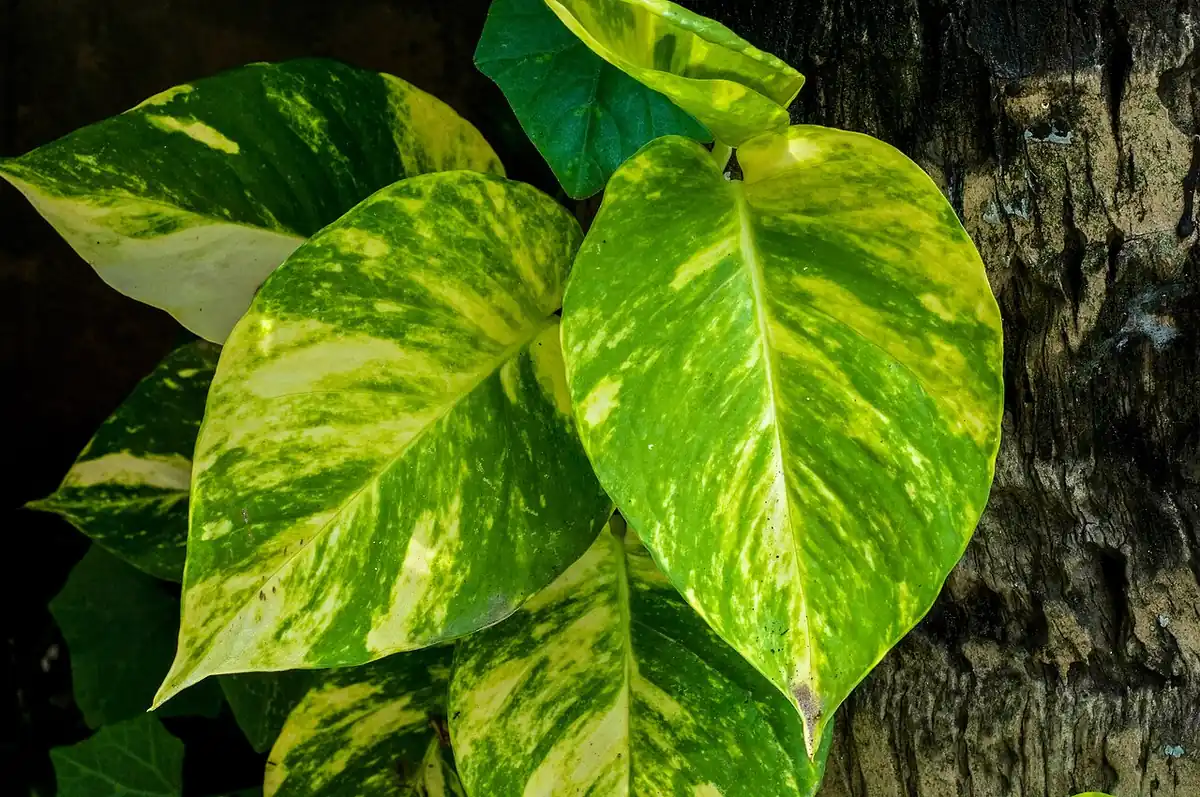
Pothos is toxic to dogs. Its leaves and stems contain insoluble calcium oxalate crystals that injure the mouth on contact, causing intense burning, drooling, and vomiting.

The ASPCA lists Monstera deliciosa as toxic to dogs and cats. Its insoluble calcium oxalate crystals burn the mouth, cause heavy drooling and vomiting, and can make swallowing difficult. Most dogs recover fully, but any dog that chews one should be watched closely.
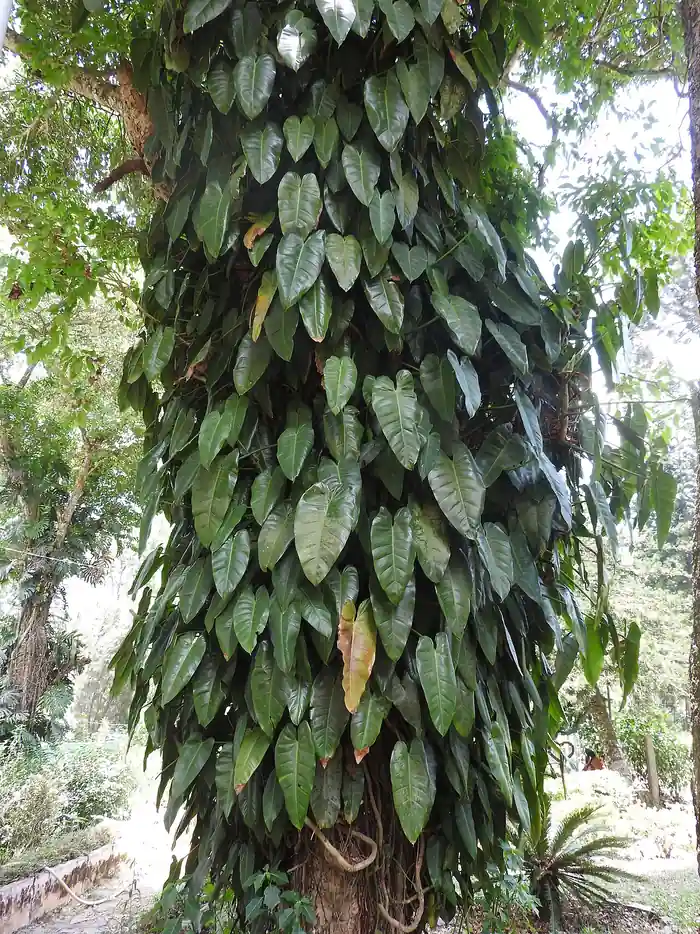
Philodendrons can poison dogs: chewing the leaves releases needle-like crystals that burn the mouth, causing drooling, swelling, and vomiting. Most exposures are mild and dogs recover fully, but throat swelling is possible, so call your vet.
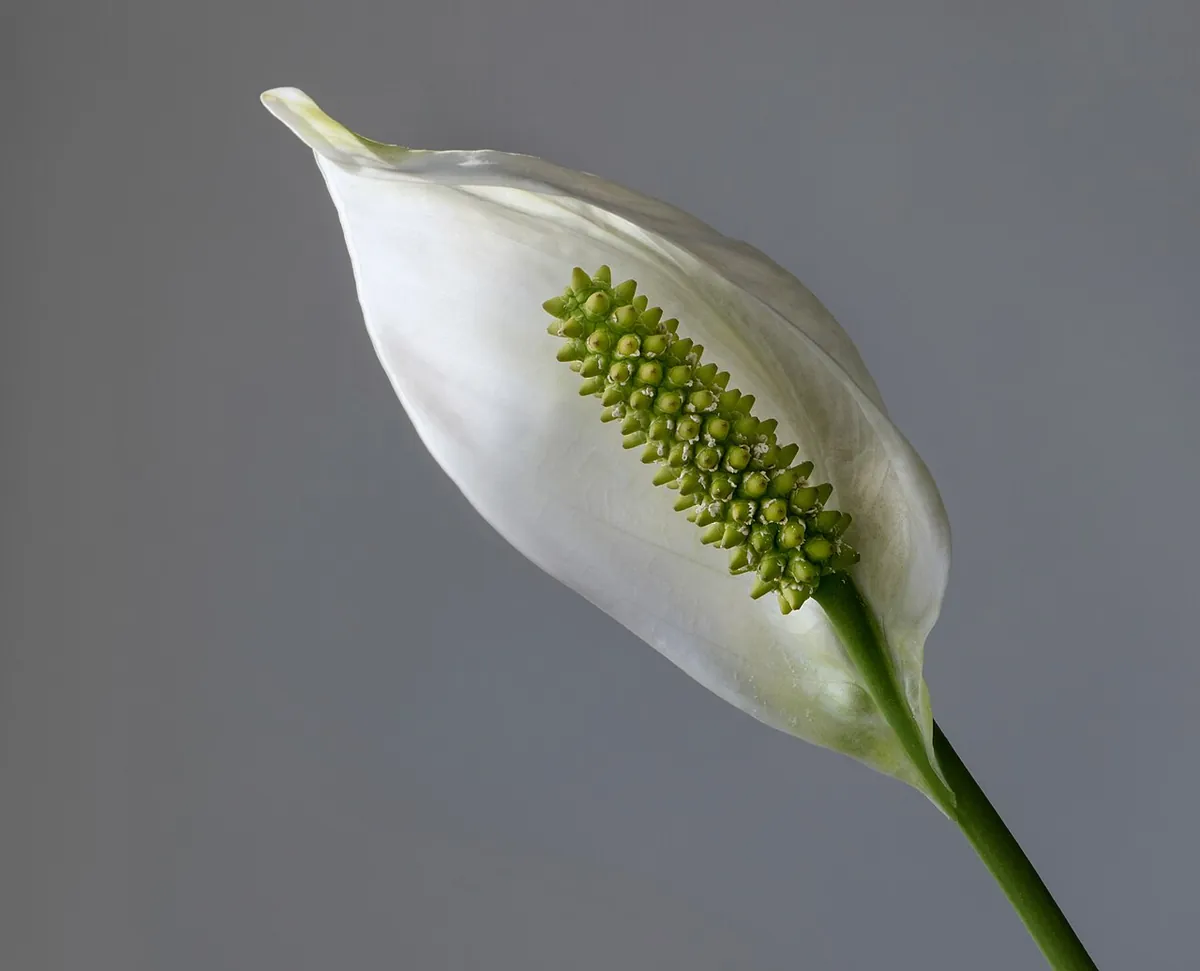
Peace lilies are toxic to dogs, but usually painful rather than life-threatening. Chewing releases calcium oxalate crystals that burn the mouth, cause drooling and vomiting, and can make swallowing difficult.