Are Snake Plants Toxic to Dogs? Symptoms and What to Do
Yes — snake plants are toxic to dogs.
Snake plants are toxic to dogs. They contain saponins, which irritate the mouth and stomach and usually cause nausea, vomiting, and diarrhea.

- Item
- Snake plants
- Scientific name
- Sansevieria trifasciata (also classified as Dracaena trifasciata)
- Also called
- Snake plant, Mother-in-law's tongue, Golden bird's nest, Good luck plant
- Category
- Plants
- Verdict
- Toxic
- Symptoms start
- Onset time is not well established for snake plants specifically. PetMD notes that symptoms of plant poisoning in general can appear within minutes to hours, depending on the plant and the amount eaten.
Yes, snake plants are toxic to dogs. The ASPCA lists the snake plant, Sansevieria trifasciata, as toxic to dogs and cats, and names saponins as the compounds responsible. Chewing or swallowing the leaves usually causes nausea, vomiting, and diarrhea.
Snake plants are one of the most popular houseplants in the United States because they survive low light and little water. That popularity puts them in many homes with dogs, often on the floor where a curious dog can reach them. This page explains what makes them toxic, how much is dangerous, the symptoms to watch for, and what to do if your dog takes a bite.
If your dog ate it — what to do now
- Take the plant away so your dog cannot eat more.
- Check how much of the leaf is missing, and save a photo of the plant to show the veterinarian.
- Call your veterinarian or the ASPCA Animal Poison Control Center at (888) 426-4435 right away (a consultation fee may apply). Do not wait for symptoms to appear.
- Follow the veterinarian's advice, which may include monitoring at home or bringing your dog in for examination and supportive care.
- Watch for vomiting, diarrhea, drooling, or lethargy, and report them to the veterinarian.
Do not do this
- Do not induce vomiting unless a veterinarian tells you to.
- Do not give milk, food, oil, or home remedies to "dilute" the toxin.
- Do not wait to see if symptoms develop before calling for advice.
- Do not assume a few bites are harmless — call your veterinarian and describe what happened.
What makes snake plants toxic to dogs?
Snake plants contain natural compounds called saponins. The ASPCA names saponins as the toxic principle of the snake plant for dogs and cats. Saponins are soap-like chemicals the plant makes to defend itself against insects and fungi, and they irritate the lining of a dog's mouth and stomach when chewed or swallowed.
Saponins are found throughout the plant, including the leaves, stems, and roots, so no part is safe to eat. The ASPCA's listed signs are limited to the stomach and gut — nausea, vomiting, and diarrhea.
- Leaves: the thick, upright blades dogs most often chew.
- Stems and roots: also contain saponins.
- No part of the plant is safe for a dog to eat.
How much snake plant is dangerous for a dog?
There is no established safe dose for snake plants, and no published toxic dose in milligrams per kilogram of body weight. The amount that causes symptoms depends on how much your dog ate and how big your dog is, and even a few bites of a leaf can be enough to cause vomiting or diarrhea.
PetMD notes that the level of toxicity depends on the type of plant, and that owners should not assume a small amount is safe. Because no threshold amount is published, treat any chewing as a reason to call your veterinarian and describe what happened. The veterinarian can judge the risk from your dog's size and the amount eaten.
Symptoms of snake plant poisoning in dogs
The ASPCA lists nausea, vomiting, and diarrhea as the clinical signs of snake plant poisoning in dogs. PetMD agrees, listing vomiting and diarrhea for mother-in-law's tongue, the common name for the snake plant. Some dogs also drool or go off their food, and a dog may seem quieter than usual after eating part of the plant.
Symptoms usually involve the stomach and gut only. The ASPCA does not list heart, breathing, or organ damage among the signs for snake plants. Even so, repeated vomiting or diarrhea can leave a dog dehydrated, so a dog that keeps being sick should be seen by a veterinarian.
What to do if your dog eats a snake plant
Take the plant away so your dog cannot eat more, and check how much of the leaf is missing. Note the time if you saw your dog chewing, and save a photo of the plant so you can identify it for the veterinarian. Do not wait for symptoms to appear before calling for advice.
Your veterinarian may advise monitoring at home or ask you to bring your dog in, depending on how much was eaten and how your dog is acting. PetMD notes that treatment for plant poisoning is supportive and depends on the symptoms, and may include fluids if a dog is dehydrated from vomiting or diarrhea. Do not try home remedies or make your dog vomit unless a veterinarian tells you to.
How to keep your dog safe from snake plants
Snake plants are popular exactly because they are hard to kill: they tolerate low light, little water, and neglect, so they end up on floors, in bedrooms, and in offices where dogs spend time. They are also sold under several names — snake plant, mother-in-law's tongue, golden bird's nest, and good luck plant — and the label may say Sansevieria trifasciata or the newer name, Dracaena trifasciata. Both names refer to the same plant, and both are toxic to dogs.
The simplest fix is to move the plant out of reach or out of the house. A high shelf works for a small plant, but a large floor plant in a heavy pot is still within reach of a big dog, so a room your dog does not enter is safer. If you propagate snake plants, keep cuttings and fallen leaves out of reach too, and check the label before you buy.
- Move snake plants to high shelves or rooms your dog does not use.
- Keep cuttings, fallen leaves, and repotting debris out of reach.
- Check the label: Sansevieria trifasciata and Dracaena trifasciata are the same plant.
- Teach a reliable "leave it" cue for houseplants.
Safe alternatives to snake plants
If you like the tall, upright look of a snake plant, a spider plant or a Boston fern gives you greenery without the saponins. Both are listed as non-toxic to dogs by the ASPCA, and both are easy to care for indoors. A parlor palm is another upright, low-light option the ASPCA lists as non-toxic.
As with any plant, "non-toxic" does not mean "food." The ASPCA notes that eating any plant material can cause vomiting and stomach upset in dogs and cats, so a dog that chews a safe plant may still be sick for a while. The difference is that a safe plant will not poison your dog.
How to identify a snake plant
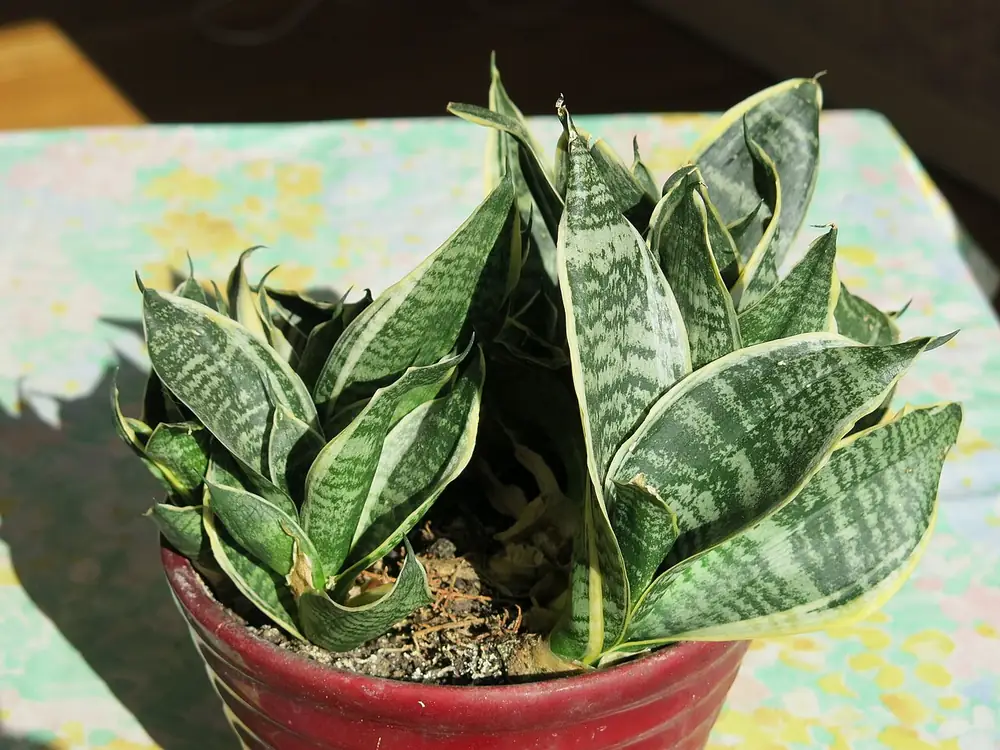
Snake plants are easy to recognize once you know the shape: stiff, upright, sword-shaped leaves that grow straight out of the soil, usually dark green with lighter wavy bands or yellow edges. Common varieties include the tall Laurentii with yellow leaf margins and the compact bird's nest form, Hahnii, which grows in a low rosette.
They are often sold in small pots as desk plants, but a mature plant can reach three or four feet tall in a floor pot. If you are not sure whether a houseplant is a snake plant, check the label for Sansevieria trifasciata or Dracaena trifasciata, or compare the stiff upright leaves with photos on the ASPCA plant database before you let your dog near it.
Symptoms to watch for
- Nausea
- Vomiting
- Diarrhea
- Drooling
- Loss of appetite
- Lethargy
The ASPCA's official listing names nausea, vomiting, and diarrhea. Drooling, appetite loss, and lethargy are also reported in other veterinary sources.
Safe alternatives
- Spider plants — Listed as non-toxic to dogs by the ASPCA, and an easy, hardy houseplant for hanging baskets or shelves.
- Boston ferns — Listed as non-toxic to dogs by the ASPCA, and a good choice for a humid bathroom or bright room.
What about cats? Snake plants are toxic to cats as well as dogs, and the ASPCA lists the same signs — nausea, vomiting, and diarrhea — for cats. Cats are often more likely to chew houseplants than dogs, so keep snake plants out of a cat's reach too.
Frequently asked questions
Can dogs eat snake plants?
No. Snake plants contain saponins, which irritate a dog's mouth and stomach. Chewing or swallowing the leaves usually causes nausea, vomiting, and diarrhea.
Are snake plants poisonous to dogs?
Yes. The ASPCA lists the snake plant (Sansevieria trifasciata) as toxic to dogs and cats, and names saponins as the toxic principle. The listed signs are nausea, vomiting, and diarrhea.
Why are snake plants toxic to dogs?
Snake plants contain saponins, soap-like compounds the plant makes to defend itself against insects and fungi. When a dog chews or swallows part of the plant, the saponins irritate the lining of the mouth and stomach, which leads to nausea, vomiting, and diarrhea.
My dog chewed a snake plant leaf — what should I do?
Take the plant away so your dog cannot eat more, note how much of the leaf is missing, and call your veterinarian or the ASPCA Animal Poison Control Center at (888) 426-4435 right away. Do not wait for symptoms, and do not try to make your dog vomit unless a veterinarian tells you to.
Sources
- ASPCA Poison Control — Snake Plant
- ASPCA Poison Control — Mother-in-Law's Tongue
- PetMD — Plants Toxic to Dogs: 19 Dangerous Plants To Avoid
Related guides

Tulips are toxic to dogs. Every part of the plant contains tulipalin A and B, but the bulb holds the highest concentration, so a dog that digs up and eats bulbs faces the greatest risk.
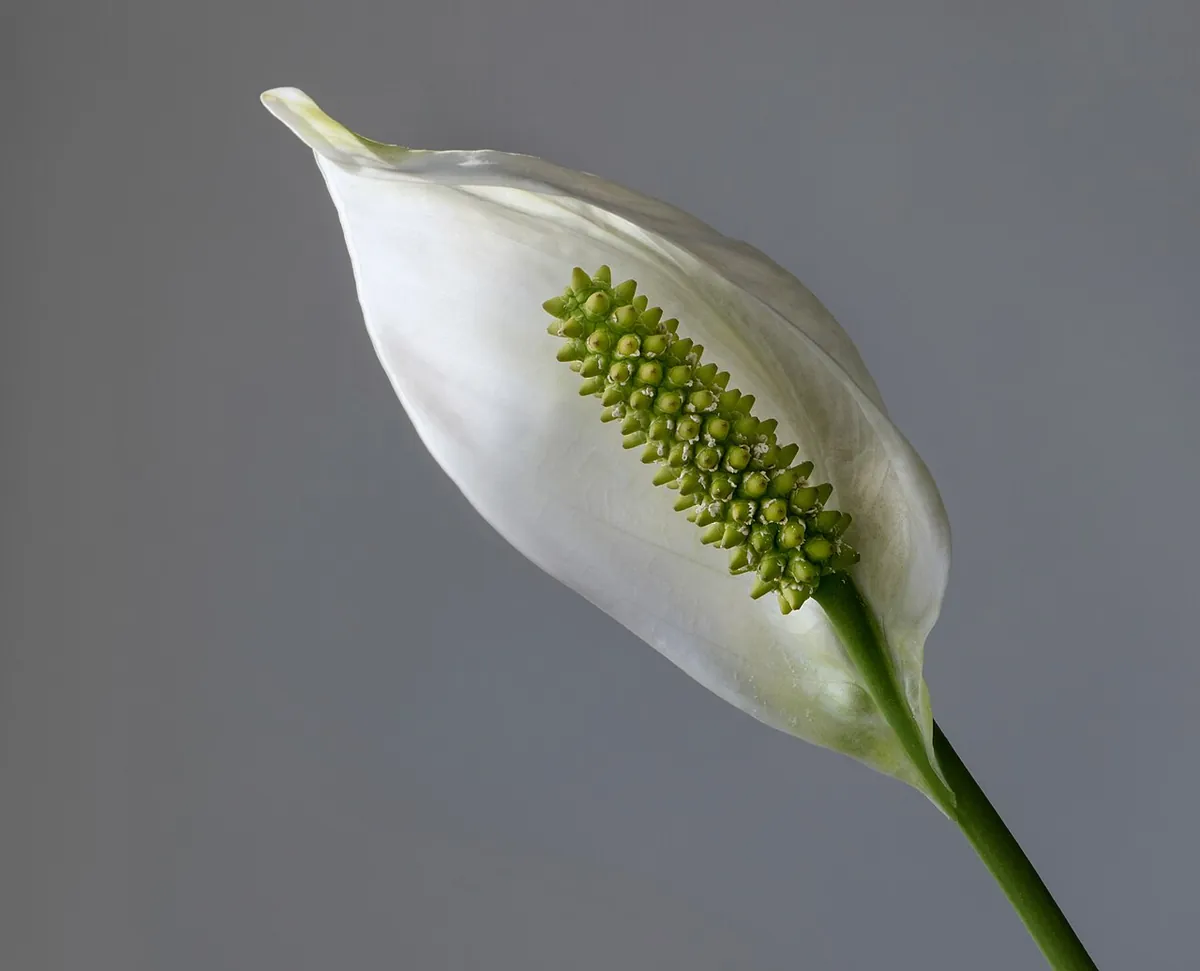
Peace lilies are toxic to dogs, but usually painful rather than life-threatening. Chewing releases calcium oxalate crystals that burn the mouth, cause drooling and vomiting, and can make swallowing difficult.
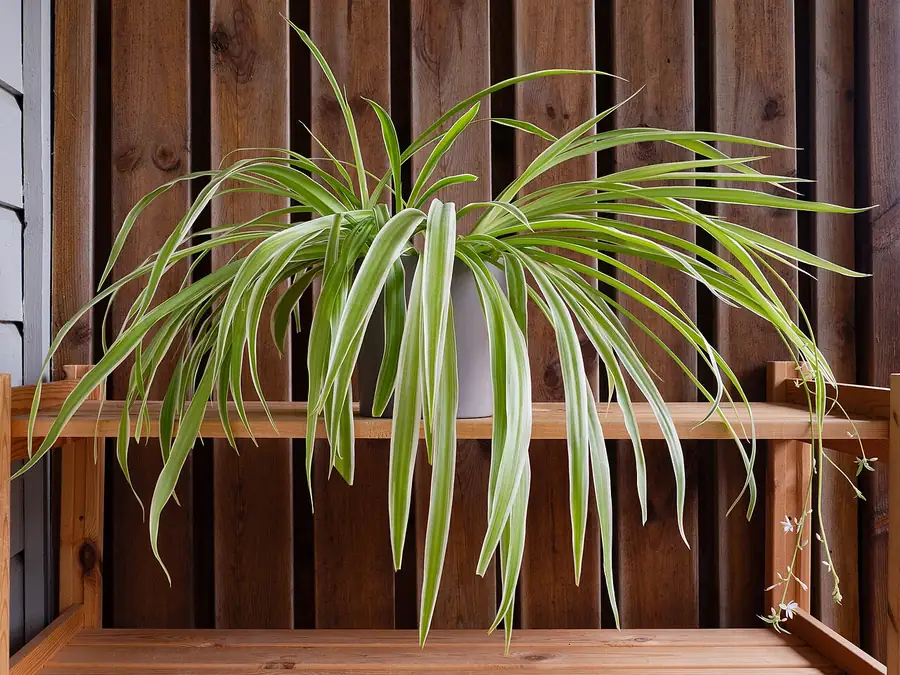
The ASPCA lists spider plants as non-toxic to dogs, cats, and horses, and PetMD includes them among the houseplants safe for dogs. A dog that eats a large amount may still get a mild stomach upset.
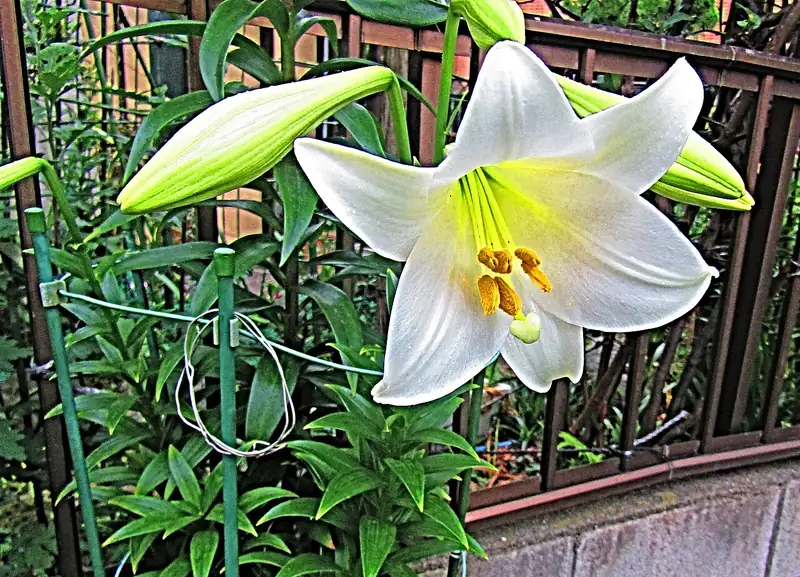
Lilies can poison dogs, usually causing vomiting, diarrhea, and drooling. True lilies are far more dangerous to cats, where they can cause fatal kidney failure. If your dog eats any lily, call your vet.