Is Coleus Toxic to Dogs? What Every Owner Should Know
Yes — coleus is toxic to dogs.
Coleus is toxic to dogs, usually causing vomiting, diarrhea, and loss of appetite. It is rarely fatal, but bloody diarrhea or vomiting can occasionally occur. If your dog eats coleus, call your vet.

- Item
- Coleus
- Scientific name
- Coleus spp. / Plectranthus scutellarioides
- Also called
- Painted nettle, Flame nettle, Indian borage, Bread and butter plant
- Category
- Plants
- Verdict
- Toxic
- Symptoms start
- Onset time is not well established — the sources reviewed do not give a time for coleus in dogs. Watch your dog closely in the hours after any ingestion.
Yes — coleus is toxic to dogs. The ASPCA lists coleus as toxic to dogs, cats, and horses, and the main signs are vomiting, diarrhea, and loss of appetite. It is not usually life-threatening, but a dog that eats a large amount can be much sicker, and the ASPCA notes that bloody diarrhea or vomiting can occasionally occur.
Coleus is one of the most common colorful houseplants and bedding plants in the United States, grown for its bright pink, red, purple, and green leaves rather than its flowers. Because it sits on windowsills, porches, and garden beds at a dog's nose height, it is a plant worth knowing about before your dog takes a bite.
If your dog ate it — what to do now
- Remove any coleus leaves from your dog's mouth if you can do so safely, and keep the plant or take a photo of it for identification.
- Call your veterinarian or the ASPCA Animal Poison Control Center at (888) 426-4435 right away (a consultation fee may apply).
- Tell them how much your dog ate, when it happened, and your dog's weight, and describe any symptoms.
- Follow your vet's instructions exactly, and take your dog to the vet or an emergency clinic if they tell you to.
Do not do this
- Do not induce vomiting unless a veterinarian tells you to.
- Do not give home remedies, milk, or activated charcoal on your own.
- Do not wait to see if the symptoms pass if your dog has bloody vomit or diarrhea, or is vomiting repeatedly.
- Do not assume coleus is safe because it is rarely fatal — call your vet and check.
What makes coleus toxic to dogs?
The ASPCA lists the toxic principle in coleus as essential oils. These oils are concentrated in the leaves and stems, and when a dog chews them they irritate the lining of the stomach and gut. That irritation is what causes the vomiting, diarrhea, and loss of appetite the ASPCA lists as the clinical signs.
One secondary source names two specific diterpene compounds in coleus leaves, coleonol and coleon O, as the toxic compounds for dogs. The ASPCA does not name specific compounds, so this page treats the essential oils as the established toxic principle and the diterpene names as reported by that secondary source only. The practical point is the same either way: the leaves are the dangerous part, and chewing them is what causes the illness.
A note on names is important here. The ASPCA entry for coleus is listed under the scientific name Coleus ampoinicus, also called Indian borage and bread and butter plant. The colorful ornamental coleus sold as a houseplant and bedding plant is usually Coleus scutellarioides, also sold as Plectranthus scutellarioides. Secondary sources treat the ornamental plant as toxic too and cite the ASPCA, and this page takes the same cautious view, but no separate ASPCA entry for the ornamental species was found in the sources reviewed.
How much coleus is dangerous for a dog?
There is no established safe dose of coleus for a dog, and no toxic dose in milligrams per kilogram has been published in the sources we reviewed. Do not assume a small nibble is harmless, and do not try to work out a safe amount from your dog's size. The right response is the same whatever the amount: watch your dog closely and call your veterinarian for advice.
The amount eaten matters. A dog that takes one bite of a leaf and spits it out is likely to have only mild stomach upset, if any. A dog that eats several leaves, or keeps chewing the plant, takes in more of the irritant oils and is more likely to vomit, have diarrhea, or refuse food. Puppies and small dogs are at higher risk from the same amount because of their size.
Symptoms of coleus poisoning in dogs
The ASPCA lists vomiting, diarrhea, depression, and anorexia as the clinical signs in dogs, and notes that bloody diarrhea or vomiting can occasionally occur. Anorexia here means loss of appetite. Other sources add drooling and lethargy, which fit the same picture of stomach upset and general unwellness.
Most cases are mild to moderate, and coleus poisoning is rarely fatal in dogs. But bloody vomit or diarrhea, repeated vomiting, refusal to eat or drink, or a dog that seems depressed, weak, or lethargic needs veterinary care right away. Because the signs overlap with many other causes of stomach upset, tell your vet what plant your dog ate — a photo helps — so they can judge the cause correctly.
What to do if your dog eats coleus
Stay calm and act quickly. Remove any coleus leaves from your dog's mouth if you can do so safely, and keep the plant or take a photo of it so the vet can identify it. Note how much your dog ate and when it happened, and whether your dog is vomiting or has diarrhea.
Call your veterinarian or the ASPCA Animal Poison Control Center at (888) 426-4435 right away (a consultation fee may apply). Tell them how much your dog ate, when it happened, and your dog's weight, and describe any symptoms you have seen. Follow their instructions exactly.
Your vet will advise whether your dog can be watched at home or needs to be seen. Treatment is usually supportive: care for the irritated stomach, fluids if your dog has vomited or had diarrhea, and monitoring until the signs settle. Most dogs recover with basic care, but a dog with bloody vomit or diarrhea may need closer observation.
How to keep your dog safe from coleus
Coleus is popular because it is easy to grow and comes in vivid colors, and that popularity is the risk. It is sold as a houseplant for windowsills and shelves, as a bedding plant for garden beds and borders, and in hanging baskets and containers on porches and patios. In warm climates it can grow outdoors year-round; in colder areas it is brought indoors for the winter, which puts it right where a bored indoor dog can reach it.
Keep coleus on high shelves, in hanging baskets, or in rooms your dog does not enter. In the garden, plant it in beds or containers your dog cannot reach, and use a fence or barrier around beds at ground level. Be careful when you bring coleus indoors for the winter: a plant that was safe outside can become a temptation indoors. Pick up fallen leaves promptly, and keep your dog away while you are pruning or repotting, since the sap can irritate skin.
Safe alternatives to coleus
You do not have to give up color to keep your dog safe. Spider plants are listed as non-toxic to dogs by the ASPCA and make good hanging houseplants that stay out of reach. Roses are also listed as non-toxic to dogs, although their thorns can injure a mouth or paw. Boston ferns give you lush green foliage indoors, and petunias bring bright color to beds and containers without the coleus risk.
If you love coleus and want to keep it, the safest option is to grow it where your dog never goes, such as a fenced front bed or a room your dog does not enter. Do not rely on the taste to protect your dog: the leaves are bitter, but a curious puppy or a dog that chews plants out of boredom may eat them anyway. A hanging basket is only safe if your dog truly cannot reach it, including by jumping or standing on furniture.
How to tell coleus from a lookalike
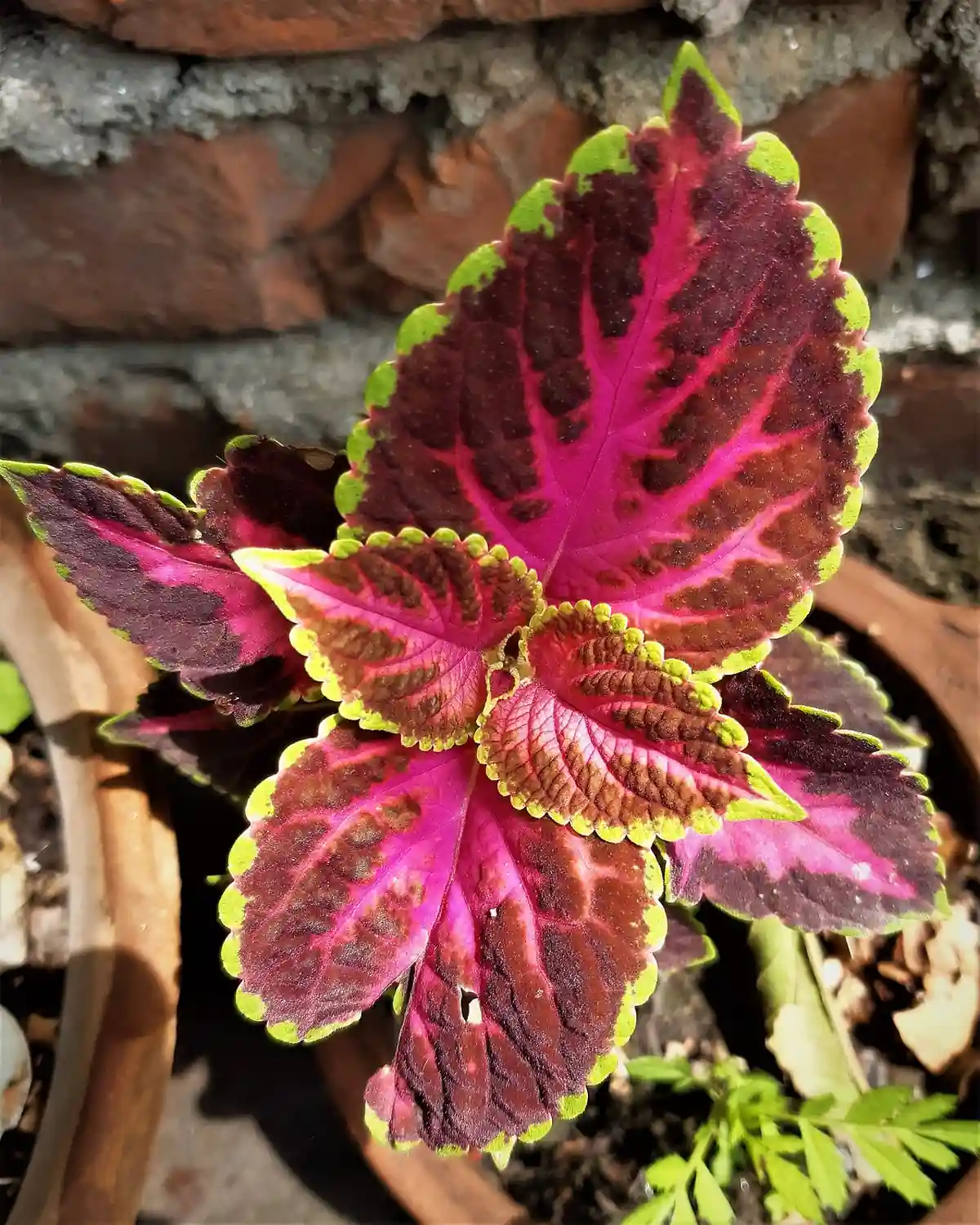
Coleus is grown for its leaves, not its flowers. The leaves are large, soft, and brightly variegated in pink, red, purple, orange, yellow, and green, often with contrasting edges and centers, and the leaf edges are usually scalloped or toothed. The plant has square stems, a mark of the mint family, Lamiaceae, which also includes mint and basil.
Coleus is sometimes confused with other colorful foliage plants, and its scientific name has changed over the years, which is why plant tags may say Coleus scutellarioides, Plectranthus scutellarioides, or Solenostemon scutellarioides. All three names refer to the same ornamental plant. If you are not sure which plant you have, photograph the leaves, stems, and plant tag for your veterinarian.
Symptoms to watch for
- Vomiting
- Diarrhea
- Loss of appetite
- Depression or lethargy
- Drooling
- Occasionally bloody diarrhea or vomiting
Symptoms are usually mild stomach upset, but bloody diarrhea or vomiting can occasionally occur, according to the ASPCA.
Safe alternatives
- Spider plants — Listed as non-toxic to dogs by the ASPCA and easy to hang out of reach.
- Roses — Listed as non-toxic to dogs by the ASPCA; thorns can injure a mouth or paw.
- Boston ferns — Lush green indoor foliage that gives the same full look without the coleus risk.
- Petunias — Bright bedding flowers that are a safer choice for garden beds and containers.
What about cats? Coleus is also toxic to cats. The ASPCA lists coleus as toxic to cats as well as dogs, with the same signs of vomiting, diarrhea, and loss of appetite, and occasionally bloody diarrhea or vomiting. Keep coleus out of reach of cats too, especially on windowsills where cats like to sit.
Frequently asked questions
Is coleus toxic to dogs?
Yes. Coleus is toxic to dogs if eaten, according to the ASPCA. It usually causes vomiting, diarrhea, and loss of appetite rather than life-threatening illness, but a dog that eats a large amount can be much sicker. Keep coleus out of your dog's reach.
What makes coleus toxic to dogs?
The ASPCA lists the toxic principle as essential oils. One secondary source names two diterpenes in the leaves, coleonol and coleon O, but the ASPCA does not name specific compounds. The essential oils irritate the stomach and gut, which is why vomiting and diarrhea are the main signs.
What should I do if my dog ate coleus?
Call your veterinarian or the ASPCA Animal Poison Control Center at (888) 426-4435 right away (a consultation fee may apply). Tell them how much your dog ate and when, and follow their instructions. Do not induce vomiting at home.
Is coleus toxic to cats too?
Yes, coleus is also toxic to cats, according to the ASPCA, with similar signs of vomiting, diarrhea, and loss of appetite. If you have both a dog and a cat, keep coleus where neither pet can reach it.
Sources
- ASPCA Poison Control — Coleus
- Plant Addicts — Are Coleus Poisonous?
- Pollinator Patch — Coleus (Coleus scutellarioides)
Related guides
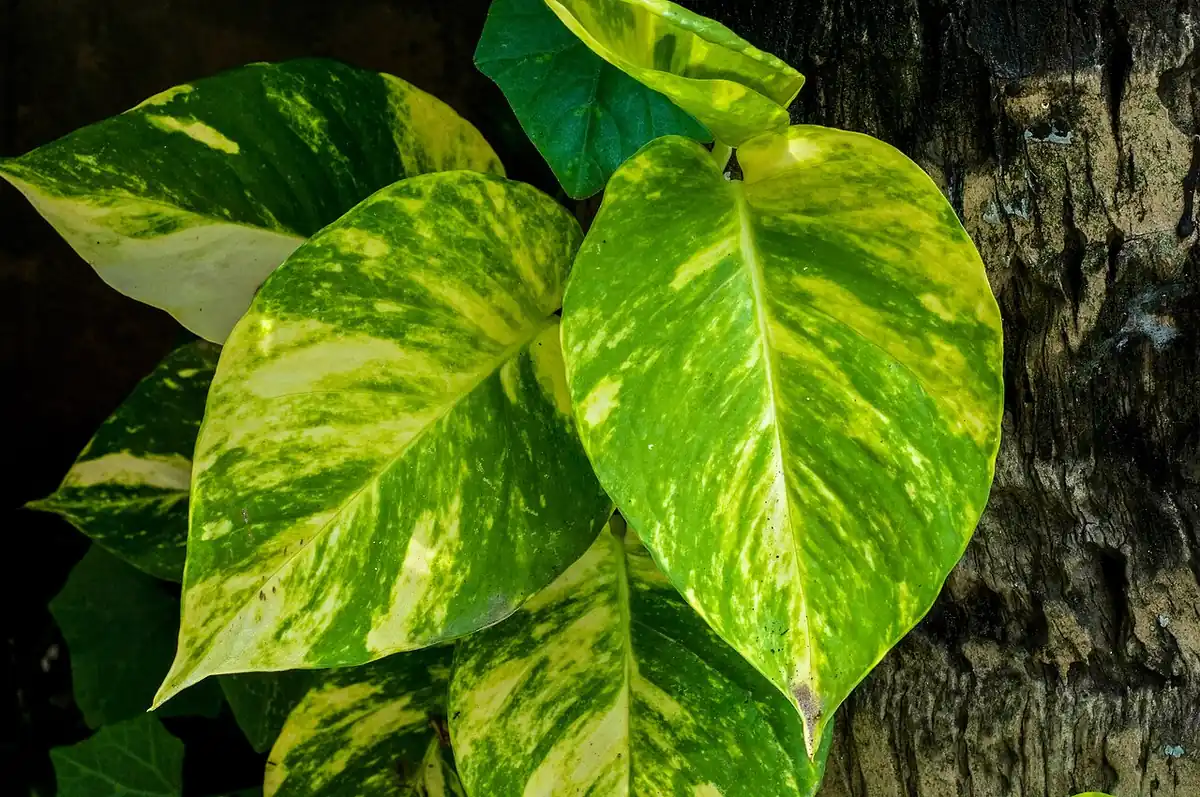
Pothos is toxic to dogs. Its leaves and stems contain insoluble calcium oxalate crystals that injure the mouth on contact, causing intense burning, drooling, and vomiting.
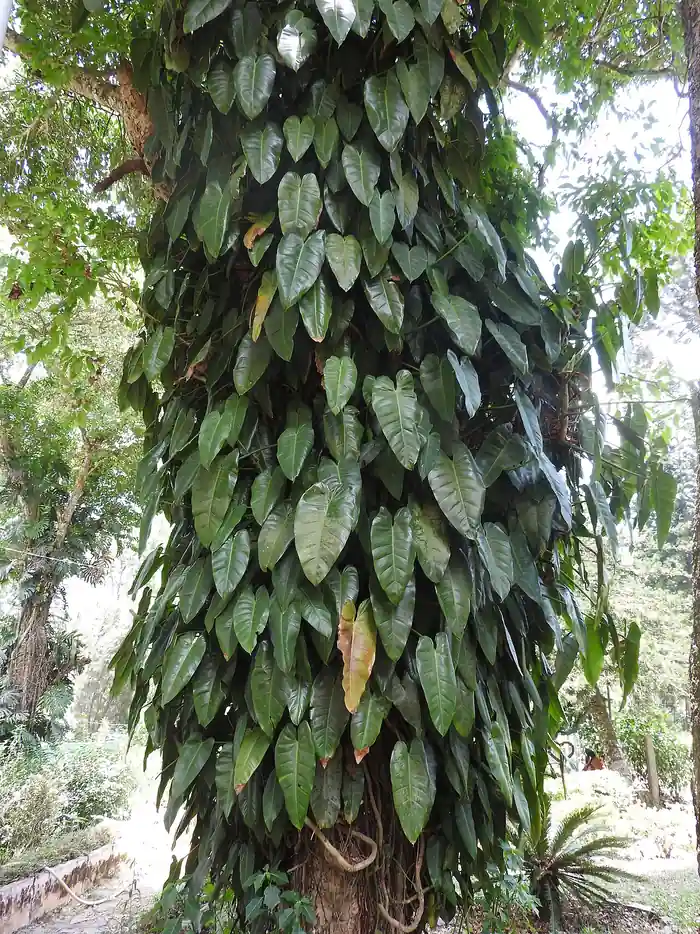
Philodendrons can poison dogs: chewing the leaves releases needle-like crystals that burn the mouth, causing drooling, swelling, and vomiting. Most exposures are mild and dogs recover fully, but throat swelling is possible, so call your vet.
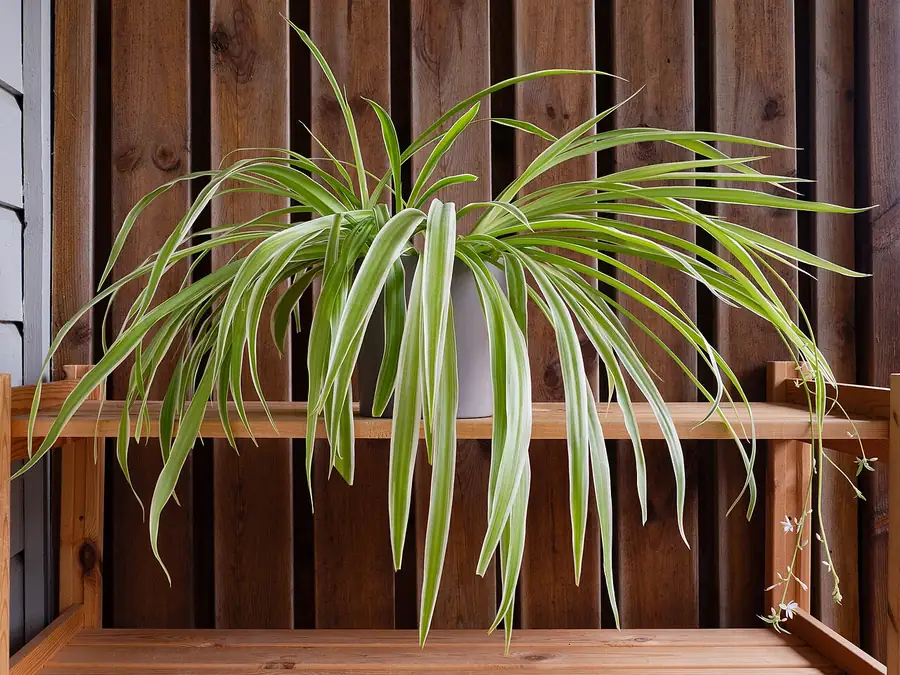
The ASPCA lists spider plants as non-toxic to dogs, cats, and horses, and PetMD includes them among the houseplants safe for dogs. A dog that eats a large amount may still get a mild stomach upset.

The ASPCA lists roses (Rosa species) as non-toxic to dogs, cats, and horses. The real risks are the thorns and any pesticides, fertilizers, or flower food on the plant.