Is Ginger Toxic to Dogs? What Every Owner Should Know
No — ginger is not toxic to dogs, in small amounts.
PetMD and the AKC agree that plain fresh or powdered ginger is safe for dogs in tiny amounts and may even help with nausea. Skip it for dogs with bleeding disorders, dogs due for surgery, and dogs on NSAIDs, and never share pickled ginger or gingerbread.


- Item
- Ginger
- Scientific name
- Zingiber officinale
- Also called
- Fresh ginger, Ginger root, Ground ginger, Powdered ginger
- Category
- Foods
- Verdict
- Safe
- Symptoms start
- Onset time is not well established — PetMD and the AKC do not give a time frame for signs of eating too much ginger, so we do not state one here. If your dog shows vomiting, diarrhea, or lethargy after eating ginger, contact your veterinarian.
No, ginger is not toxic to dogs. PetMD says dogs can safely eat ginger, and the American Kennel Club (AKC) agrees that ginger, in small amounts, is safe for dogs and might even be good for them. The active compound gingerol gives ginger its anti-inflammatory and antioxidant properties, and a small amount may help settle nausea and motion sickness.
The catch is the dose. Ginger should only ever be given in tiny amounts, and it must be the fresh or powdered kind, not pickled. Too much ginger can upset your dog's stomach, and as a natural blood thinner it is unsafe for some dogs.
If your dog ate it — what to do now
- Check what your dog ate: plain fresh or powdered ginger, a large amount, or a ginger product such as gingerbread.
- If it was a small amount of plain ginger and your dog is a healthy adult, watch for vomiting or diarrhea and offer fresh water.
- Call your veterinarian right away if your dog ate gingerbread, a product that may contain xylitol or nutmeg, or a large amount of ginger.
- Call your veterinarian right away if your dog has a bleeding disorder, is due for surgery, or takes blood thinners or NSAIDs.
- Tell the veterinarian how much was eaten, what product it was, and your dog's weight, age, and health conditions.
Do not do this
- Do not induce vomiting unless a veterinarian tells you to.
- Do not give pickled ginger, gingerbread, ginger snaps, ginger ale, or candied ginger to your dog.
- Do not give ginger to a dog with a bleeding disorder, a dog due for surgery, or a dog taking NSAIDs or blood thinners unless your veterinarian tells you to.
- Do not use ginger as a medicine for repeated vomiting or joint pain instead of veterinary care.
Why ginger is considered safe for dogs
Ginger contains no toxin that affects dogs in small amounts. PetMD says dogs can safely eat ginger and that it can even provide some health benefits, and the AKC says ginger in small amounts is safe for dogs and might even be good for them. Ginger roots contain a bioactive compound called gingerol, which is the reason it has anti-inflammatory and antioxidant properties, according to PetMD. The AKC notes that ginger is most widely used for nausea caused by motion sickness, and that it may also lessen gas and bloating. Ginger is a supplement to a balanced diet, not a replacement for it, and it should never be given as a medicine for a serious condition without veterinary advice.
- No toxic principle in small amounts: PetMD and the AKC list ginger as safe for dogs
- Active compound: gingerol, with anti-inflammatory and antioxidant properties
- Best known use: easing nausea and motion sickness
How much ginger is safe for dogs?
There is no toxic dose for ginger in the usual sense, because plain ginger is not toxic, but the safe serving is very, very small. PetMD gives portion guidelines for a healthy adult dog: extra-small dogs of 2 to 20 pounds, less than a quarter of a teaspoon of raw ginger; small dogs of 21 to 30 pounds, approximately a quarter of a teaspoon; medium dogs of 31 to 50 pounds, approximately half a teaspoon; large dogs of 51 to 90 pounds, approximately three-quarters of a teaspoon or less; and extra-large dogs of 91 pounds and up, approximately three-quarters of a teaspoon. The AKC's rule of thumb is never more than one-sixteenth of a teaspoon per pound of body weight.
- No toxic dose: plain ginger is nontoxic, but the safe serving is very small
- PetMD portions: less than 1/4 teaspoon for extra-small dogs up to about 3/4 teaspoon for large dogs
- AKC rule of thumb: never more than 1/16 teaspoon per pound of body weight
Symptoms to watch for after a dog eats ginger
A healthy adult dog that eats a pinch of fresh ginger usually shows no symptoms at all, and may even feel less nauseous. Problems start when a dog eats too much: PetMD says too much ginger can upset your dog's stomach, and the AKC says ginger in large amounts can cause gas and nausea. The AKC also warns that ginger can lower blood pressure and blood sugar, so a dog with diabetes or heart disease that has eaten ginger should be watched and the vet consulted. If your dog vomits repeatedly, has diarrhea, seems lethargic, or shows any bleeding, such as bleeding gums, after eating ginger, contact your veterinarian right away.
- Too much ginger: stomach upset, gas, nausea, diarrhea
- Blood pressure and blood sugar: ginger can lower both, so watch dogs with diabetes or heart disease
- Repeated vomiting, lethargy, or any bleeding after ginger needs a vet right away
What to do if your dog eats ginger
First, check what your dog actually ate. If it was a small amount of fresh or powdered ginger and your dog is a healthy adult, there is usually nothing to do except watch your dog for vomiting or diarrhea over the next day. If your dog ate a large amount of ginger, a ginger product, or gingerbread, call your veterinarian for advice and keep the packaging so you can read the ingredient list to the vet. Call right away, and do not wait for signs, if your dog has a bleeding disorder, is due for surgery, or takes blood thinners or anti-inflammatory pain medicines, or if the product may contain xylitol or nutmeg.
- A small amount of fresh or powdered ginger: usually nothing to do except watch for vomiting or diarrhea
- A large amount, gingerbread, or a ginger product: call your veterinarian and keep the packaging
- Call right away if your dog has a bleeding disorder, is due for surgery, or takes blood thinners or NSAIDs
How to keep your dog safe around ginger
Only ever offer plain ginger: fresh grated root, plain powder, or ginger juice, with nothing added. Start with a very small amount mixed into your dog's food, and watch for any reaction before offering more. Ask your veterinarian before giving ginger to any dog with a health condition or on medication, and avoid ginger entirely for dogs with bleeding disorders, dogs having surgery soon, and dogs taking non-steroidal anti-inflammatory drugs (NSAIDs), because ginger acts as a blood thinner, according to the AKC. Some vets also advise avoiding ginger in pregnant and nursing dogs, because its safety has not been established. Store fresh ginger and ginger powder where your dog cannot reach them.
- Only plain ginger: fresh grated root, plain powder, or ginger juice
- Start with a very small amount and watch for any reaction
- Avoid ginger for dogs with bleeding disorders, dogs due for surgery, and dogs on NSAIDs
- Ask your vet first for pregnant or nursing dogs and dogs on medication
Ginger products to watch for
Plain ginger and ginger-flavored foods are not the same thing. Pickled ginger, the kind served with sushi, should not be shared with dogs: PetMD says the pickling process adds sugar and vinegar, and the salt can lead to stomach problems or, over time, weight gain or diabetes, and some brands may contain xylitol. Gingerbread is also out: PetMD says it should not be part of a dog's diet because nutmeg is toxic to dogs and can cause diarrhea, vomiting, and seizures in severe cases, and the icing and candies, especially chocolate or sugar-free sweets containing xylitol, can be very harmful. Ginger snaps, ginger ale, and candied ginger are also best avoided, because they are high in sugar and may contain xylitol or other unsafe ingredients.
- Pickled ginger: added sugar, vinegar, and salt — and possibly xylitol — do not share it
- Gingerbread: nutmeg is toxic to dogs, and icing and candies may contain chocolate or xylitol
- Ginger snaps, ginger ale, and candied ginger: high in sugar and may contain xylitol — avoid them
Safe alternatives to ginger
If you want to give your dog a treat without the risks of a new spice, several everyday foods work better. Plain pumpkin puree, not pie filling, is a gentle, low-sugar spoonful that many dogs like and that is often used for upset stomachs. Blueberries are sweet, low in calories, and widely fed to dogs as treats. Carrot pieces give a satisfying crunch with very little sugar. As with ginger, keep treats within 10 percent of daily calories, and check with your veterinarian first if your dog has a health condition or takes medication.
- Plain pumpkin puree: not pie filling; a gentle, low-sugar spoonful many dogs like
- Blueberries: sweet and low in calories, a safer everyday treat
- Carrots: a crunchy, low-sugar chew most dogs enjoy
Symptoms to watch for
- Stomach upset
- Gas
- Nausea
- Vomiting
- Diarrhea
- Lethargy
- Low blood pressure
- Low blood sugar (in diabetic dogs)
- Bleeding or bruising (in dogs with bleeding disorders or on blood thinners)
A pinch of plain ginger usually causes no symptoms; the signs listed here are from eating too much ginger or from ginger's blood-thinning effect in dogs that should not have it.
Safe alternatives
- Plain pumpkin puree — Not pie filling; a gentle, low-sugar spoonful many dogs like.
- Blueberries — Sweet and low in calories; a safer everyday treat than a new spice.
- Carrots — A crunchy, low-sugar chew most dogs enjoy.
What about cats? We could not find an ASPCA listing for ginger and cats in the sources we checked, so we do not state that ginger is safe for cats. Ginger is used as a herbal supplement in cats, mainly against nausea, but only a veterinarian can say whether it is safe for a particular cat. Ask your veterinarian before giving ginger to any cat.
Frequently asked questions
Can dogs eat ginger?
Yes. PetMD and the AKC both say dogs can safely eat ginger in small amounts, and it may even help with nausea and motion sickness. It must be the fresh or powdered kind, not pickled, and only in tiny amounts — a quarter of a teaspoon or less for most dogs.
Can dogs eat pickled ginger?
No, pickled ginger should not be shared with dogs. PetMD says the pickling process adds sugar and vinegar, and the salt from pickling can lead to stomach problems or, over time, weight gain or diabetes. Some brands may also contain xylitol, which is extremely toxic to dogs.
Can dogs eat gingerbread?
No. PetMD says gingerbread should not be part of a dog's diet because the other ingredients are not safe — especially nutmeg, which is toxic to dogs and can cause diarrhea, vomiting, and seizures. Icing and candies, especially chocolate or sugar-free sweets containing xylitol, are also dangerous.
Can puppies have ginger?
PetMD does not give a separate portion for puppies, and the AKC advises asking your veterinarian before giving ginger to any dog with health conditions or on medication. Start with a very small amount only for a healthy adult dog, and ask your vet first for a puppy, a pregnant or nursing dog, or a dog on medication.
Sources
- PetMD — Can Dogs Eat Ginger?
- American Kennel Club — Can Dogs Eat Ginger?
- PetMD — Can Dogs Eat Gingerbread?
Related guides

Cinnamon is listed as non-toxic to dogs by the ASPCA, and a small amount of ground cinnamon is unlikely to harm a healthy dog. But more than a teaspoon of powder, cinnamon sticks, or any amount of cinnamon essential oil can cause serious illness.

The ASPCA lists sweet basil (Ocimum basilicum) as non-toxic to dogs, and PetMD includes it among safe herbs. A few fresh leaves are fine; a large amount may cause mild stomach upset. Basil essential oil is a different product and should never be given to a dog.
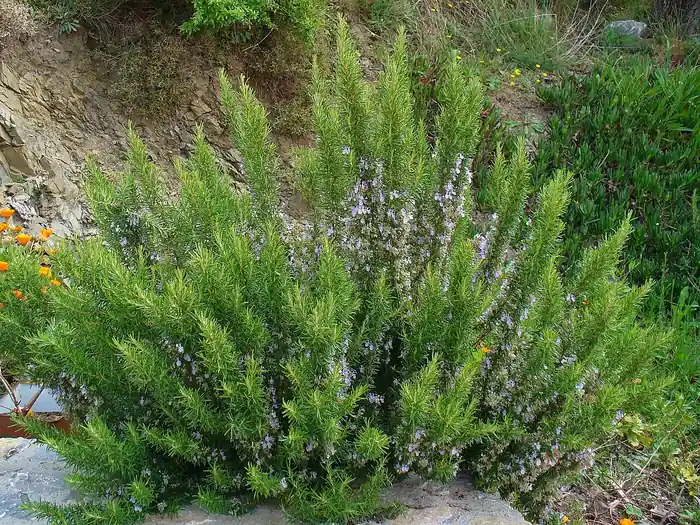
Rosemary, the fresh or dried herb, is listed as non-toxic to dogs by the ASPCA. Large amounts can still upset the stomach, and concentrated rosemary essential oil is a different matter — never apply it to your dog or let them swallow it.
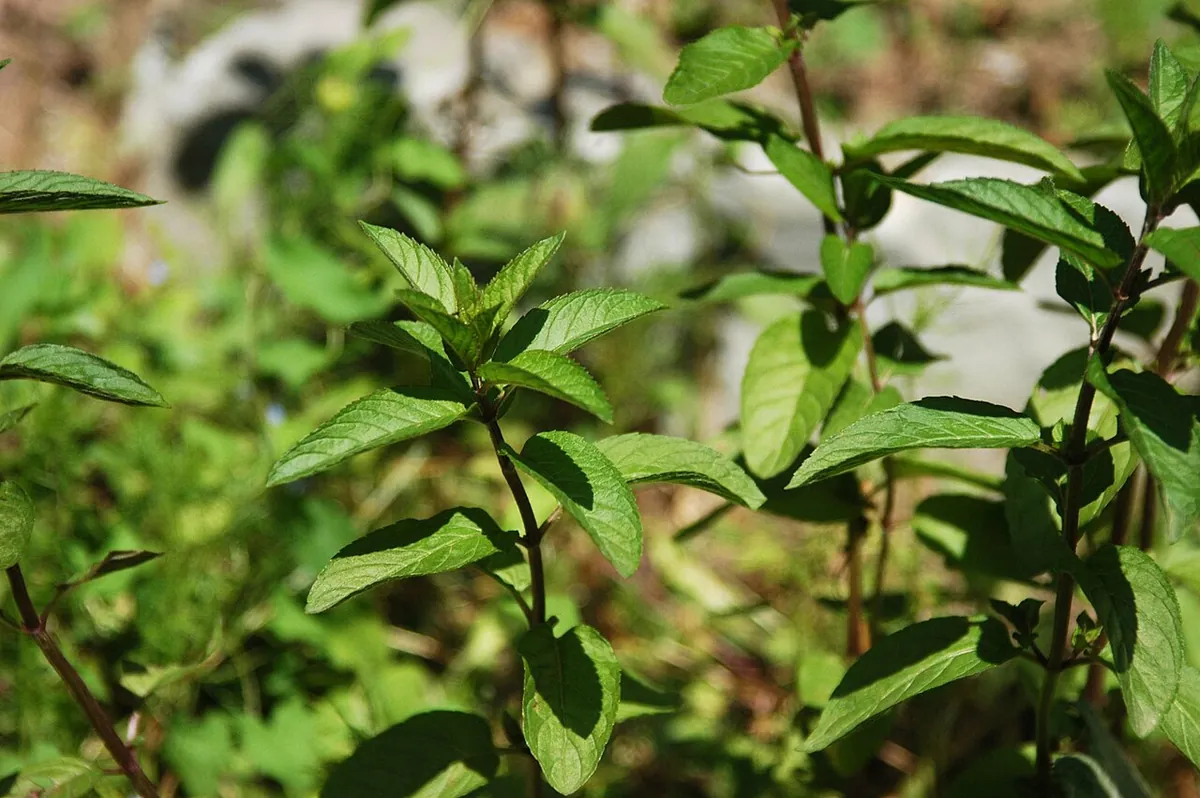
A few plain peppermint or spearmint leaves are unlikely to harm most healthy dogs, but the ASPCA lists mint as toxic because of its essential oils, and large amounts cause vomiting and diarrhea. Pennyroyal, concentrated mint oil, and xylitol-sweetened mint products are genuinely dangerous. When in doubt, call your vet.