Are Prayer Plants Toxic to Dogs? What Every Owner Should Know
No — prayer plants are not toxic to dogs.
The ASPCA lists prayer plants as non-toxic to dogs, cats, and horses. A dog that eats a large amount of leaves may still get mild vomiting or diarrhea from the plant material, but the plant itself will not poison your dog.

- Item
- Prayer Plants
- Scientific name
- Maranta leuconeura
- Also called
- Prayer plant, Maranta, Red-veined prayer plant, Herringbone plant, Rabbit tracks
- Category
- Plants
- Verdict
- Safe
- Symptoms start
- There is no poisoning onset time for prayer plants because they contain no toxin. Signs of mild stomach upset, if they occur after a dog eats a large amount of plant material, usually appear soon after eating.
Prayer plants are one of the most popular houseplants in American homes, loved for their patterned leaves that fold up at night like hands in prayer. They are also one of the safest houseplants for dog owners: the ASPCA Animal Poison Control Center lists the prayer plant as non-toxic to dogs, cats, and horses, with no toxic principle.
Non-toxic does not mean risk-free, though. A dog that eats a large amount of any plant material can get mild vomiting or diarrhea, and a chewed-up plant can also be a choking risk. The plant is safe in the sense that it will not poison your dog, not in the sense that it is food.
If your dog ate it — what to do now
- Check what your dog ate, look inside its mouth for pieces of leaf, and remove any loose plant material you can see.
- Confirm the plant is a prayer plant by checking the tag for Maranta leuconeura or Calathea, and keep the tag.
- Call your veterinarian or ASPCA Animal Poison Control Center at (888) 426-4435 (a consultation fee may apply) if your dog vomits more than once, has diarrhea that does not settle, refuses food and water, or seems in pain.
- If the plant might be a dieffenbachia or philodendron rather than a prayer plant, call your veterinarian or ASPCA Animal Poison Control Center at (888) 426-4435 (a consultation fee may apply) right away, even if your dog looks fine.
- Watch your dog for the next day for vomiting, diarrhea, or pain, and seek veterinary care if any of these appear or get worse.
Do not do this
- Do not induce vomiting unless a veterinarian tells you to.
- Do not assume a plant is a prayer plant just because the name sounds similar — check the scientific name on the tag first.
- Do not let your dog eat large amounts of any plant material, even a non-toxic one.
- Do not use home remedies as a substitute for veterinary care if your dog keeps vomiting or seems in pain.
Why prayer plants are considered safe for dogs
Prayer plants contain no known toxin that affects dogs. The ASPCA entry for the prayer plant lists the toxic principles as non-toxic, so no poisoning symptoms are listed for the plant. The entry gives Calathea insignis as the scientific name and lists Maranta among the common names, which is why this page covers Maranta leuconeura, the plant most owners buy as a prayer plant.
That does not mean a dog should eat prayer plants as a snack. PetMD notes that even non-toxic plants can cause mild stomach upset if a dog eats a large amount of plant material.
- ASPCA listing: non-toxic to dogs, cats, and horses
- Toxic principles: none listed
- Risk comes from eating plant material, not from poison
How much prayer plant is dangerous for dogs?
There is no established toxic dose for prayer plants, because there is no toxin to measure a dose against. A few nibbled leaves are not expected to cause more than mild stomach upset, if anything at all.
Amount still matters for a different reason. The ASPCA warns that eating any plant material can cause vomiting and stomach upset in dogs and cats, even when the plant is listed as non-toxic. A dog that chews up a whole prayer plant is more likely to vomit or have diarrhea than a dog that takes a single nibble.
- No toxic dose exists, because there is no toxin
- A few nibbled leaves are not expected to cause harm
- A large amount of leaves can still cause mild vomiting or diarrhea
Symptoms to watch for after a dog eats a prayer plant
Most dogs show no symptoms at all after nibbling a prayer plant. When symptoms do appear, they are mild and short-lived: vomiting once or twice, loose stool, or a brief loss of appetite. These come from the plant fiber irritating the stomach, not from poisoning.
A dog that chews a large amount of leaves may drool, paw at its mouth, or gag if a piece of leaf is stuck. Repeated vomiting, bloody vomit, a swollen or painful belly, or a dog that refuses food and water for more than a day needs a veterinarian. Those signs may mean the dog ate something else as well, or has a blockage from swallowing a large amount of plant material.
- Most dogs show no symptoms at all
- Possible signs: mild vomiting, diarrhea, drooling
- Repeated vomiting or a painful belly needs a veterinarian
What to do if your dog eats a prayer plant
Stay calm and check what your dog actually ate. Look inside its mouth for pieces of leaf, and remove any loose plant material you can see. Confirm that the plant really is a prayer plant by checking the tag for Maranta leuconeura or Calathea, and keep the tag in case your veterinarian asks.
Most of the time, no treatment is needed beyond watching your dog. Offer plain water if your dog can swallow normally, and keep it away from the plant so it cannot eat more. Call your veterinarian or the ASPCA Animal Poison Control Center at (888) 426-4435; a consultation fee may apply, if your dog vomits more than once, has diarrhea that does not settle, refuses food and water, or seems in pain.
- Check what your dog ate and remove any loose leaves
- Offer plain water if your dog can swallow normally
- Call your vet or ASPCA Animal Poison Control at (888) 426-4435 (a consultation fee may apply) if symptoms persist
How to keep your dog safe around prayer plants
Prayer plants and dogs can share a home with a little planning. Hang the plant in a basket or place it on a high shelf where your dog cannot reach the leaves, especially if you have a puppy or a dog that chews plants. Prayer plants like bright, indirect light, so a high shelf near a window usually suits the plant as well as it protects the dog.
Teach your dog to leave plants alone, and offer a chew toy when it shows interest in a leaf. Keep potting soil, fertilizer, and plant food out of reach as well, because those can upset a dog's stomach even when the plant itself is safe. If your dog keeps going back to the same plant, move it to a room your dog does not use.
- Hang prayer plants or place them on high shelves
- Keep plants out of reach of puppies and known chewers
- Offer a chew toy and teach a leave-it cue
How to identify a prayer plant — and its look-alikes
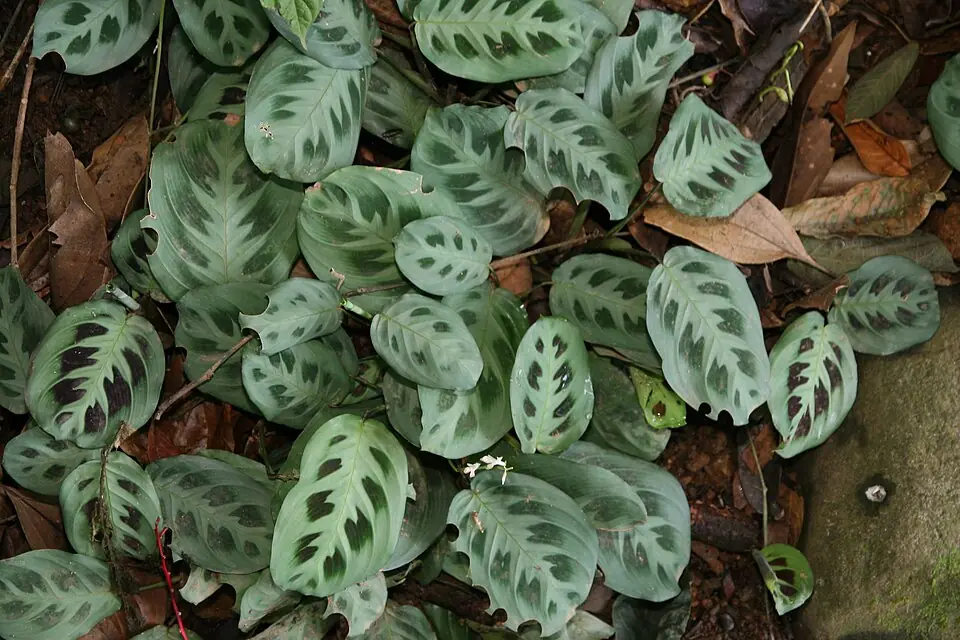
A true prayer plant, Maranta leuconeura, has small oval leaves with a dark green pattern and red veins, and the leaves fold upward at night and open again in the morning. The red-veined variety is the most common one sold, and it is sometimes called the herringbone plant or rabbit tracks. Calatheas are close relatives in the same family, with larger and more upright leaves.
The plants to watch out for are the ones that look similar but are not prayer plants. Dieffenbachia, also called dumb cane, has large patterned leaves and is toxic to dogs, causing mouth pain, drooling, and swelling. Philodendrons also have patterned heart-shaped leaves and are toxic to dogs. If a plant tag says Dieffenbachia or Philodendron, it is not a prayer plant.
- Maranta leuconeura: small oval leaves, red veins, folds up at night
- Calathea: larger, more upright leaves, also folds at night
- Look-alikes to check: dieffenbachia and philodendron, which are toxic
Safe alternatives to prayer plants
Prayer plants are already a safe choice, but if you want more variety, several other houseplants are equally safe. Spider plants and Boston ferns are both listed as safe for dogs, and Boston ferns like the same warm, humid conditions as prayer plants. Orchids and areca palms are also listed as safe for dogs by PetMD.
Whatever you choose, keep the same habits: check the scientific name on the tag, keep plants out of reach of a dog that chews, and do not let your dog eat plant material. Even a safe plant can cause vomiting or diarrhea if a dog eats a large amount of it.
- Spider plants: non-toxic to dogs, good in a hanging basket
- Boston ferns: safe for dogs and like the same humidity as prayer plants
- Orchids: safe for dogs and flower for months
Symptoms to watch for
- Mild vomiting
- Diarrhea
- Drooling
- Loss of appetite
- Pawing at the mouth
- Gagging
- Repeated vomiting
- Bloody vomit
- Swollen or painful belly
- Refusal to eat or drink
Most dogs show no symptoms after nibbling a prayer plant; any signs are usually mild stomach upset from eating plant material, not poisoning.
Safe alternatives
- Spider plants — Listed as non-toxic to dogs by the ASPCA, and easy to grow in a hanging basket.
- Boston ferns — Listed among the houseplants safe for dogs by PetMD.
- Roses — Listed as non-toxic to dogs by the ASPCA, for color instead of patterned leaves.
- Orchids (Phalaenopsis) — A flowering houseplant listed as safe for dogs by PetMD.
- Areca palms — A larger houseplant listed as safe for dogs by PetMD.
What about cats? Prayer plants are also listed as non-toxic to cats by the ASPCA, which lists the plant as non-toxic to dogs, cats, and horses. A cat that chews a prayer plant may still get mild stomach upset from eating plant material, but the plant itself is not poisonous to cats.
Frequently asked questions
Are prayer plants toxic to dogs?
No. The ASPCA Animal Poison Control Center lists the prayer plant as non-toxic to dogs, cats, and horses. Eating a large amount of any plant material can still cause mild vomiting or diarrhea, but the prayer plant itself will not poison your dog.
Why do prayer plant leaves fold up at night?
Prayer plants fold their leaves up at night and open them again in the morning, which looks like hands folded in prayer. This daily movement is called nyctinasty, and it is a normal behavior of Maranta and its close relatives, not a sign that the plant is unwell.
Is Maranta leuconeura the same as a prayer plant?
Yes, Maranta leuconeura is the most common prayer plant sold in the United States, and it is the plant most owners mean. The ASPCA's prayer plant entry gives Calathea insignis as the scientific name and lists Maranta among the common names, so check that the plant you have is a Maranta or a Calathea, and not a different plant sold under a similar name.
Are prayer plants and calatheas the same thing?
No, they are different plants, but both are popular houseplants and both are in the Marantaceae family. Calathea leaves are usually larger and more upright, while Maranta leaves are smaller, spread low, and fold up clearly at night. The ASPCA lists the prayer plant entry as non-toxic to dogs, and calatheas are also widely listed as non-toxic, but check the scientific name on the tag for either plant.
Sources
- ASPCA Poison Control — Prayer Plant
- PetMD — 29 Flowers and Plants That Are Safe for Dogs
- ASPCA Poison Control — Dieffenbachia
- ASPCA Poison Control — Cordatum (Philodendron)
Related guides
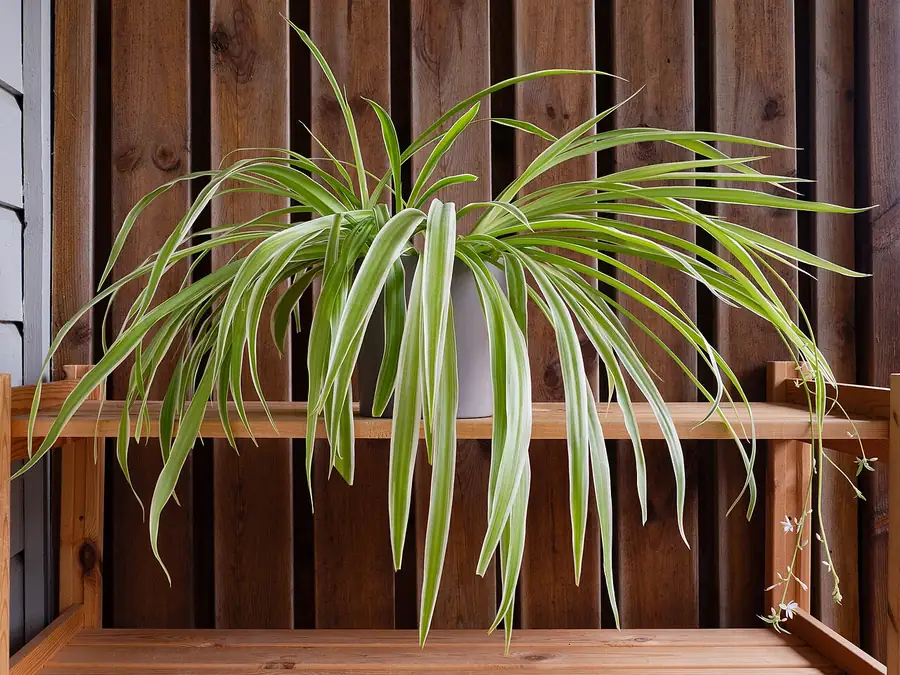
The ASPCA lists spider plants as non-toxic to dogs, cats, and horses, and PetMD includes them among the houseplants safe for dogs. A dog that eats a large amount may still get a mild stomach upset.
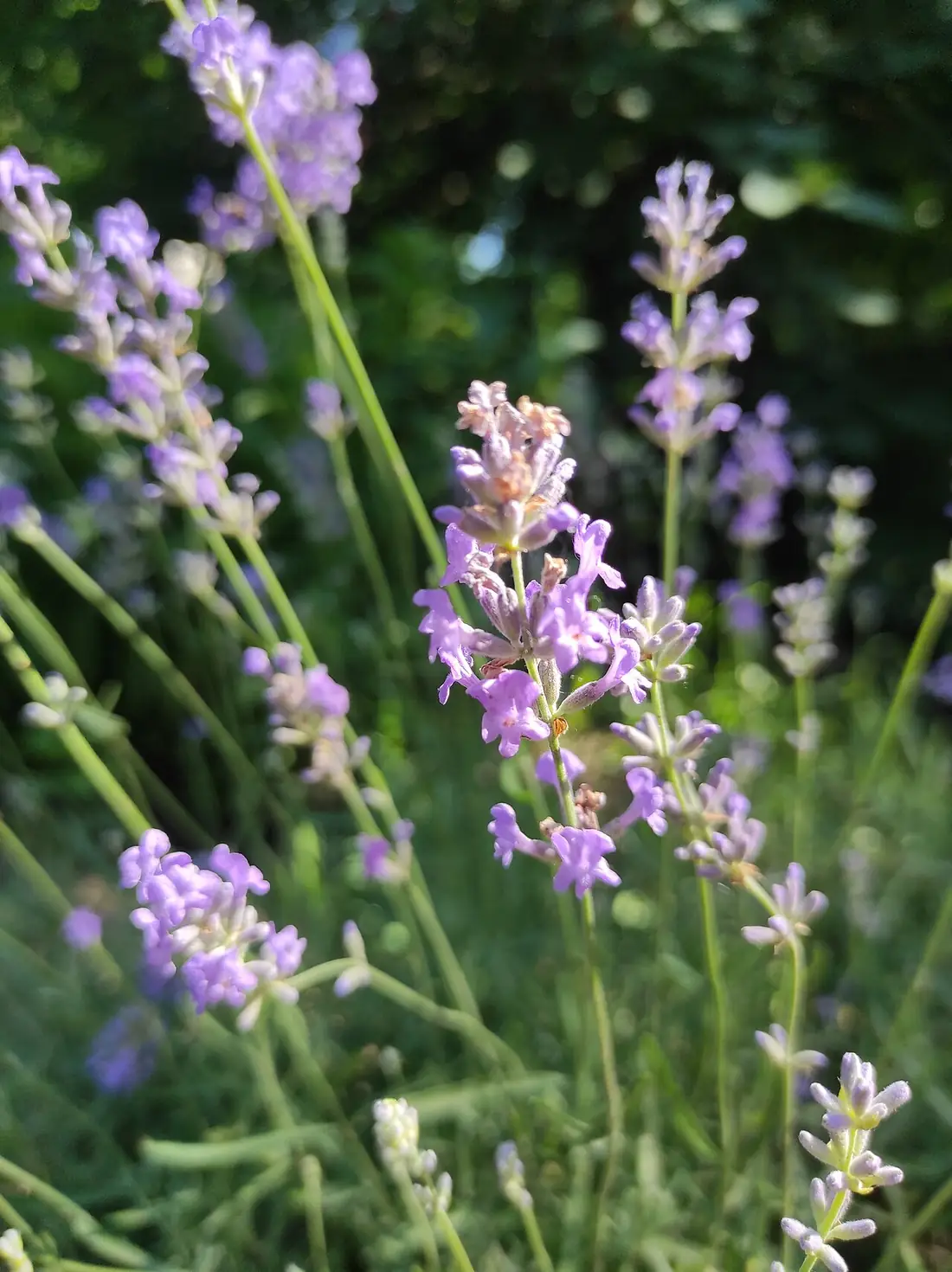
The ASPCA lists lavender as toxic to dogs. Eating the plant usually causes only mild stomach upset, but concentrated lavender essential oil is a much bigger risk and should never be swallowed or put on your dog.
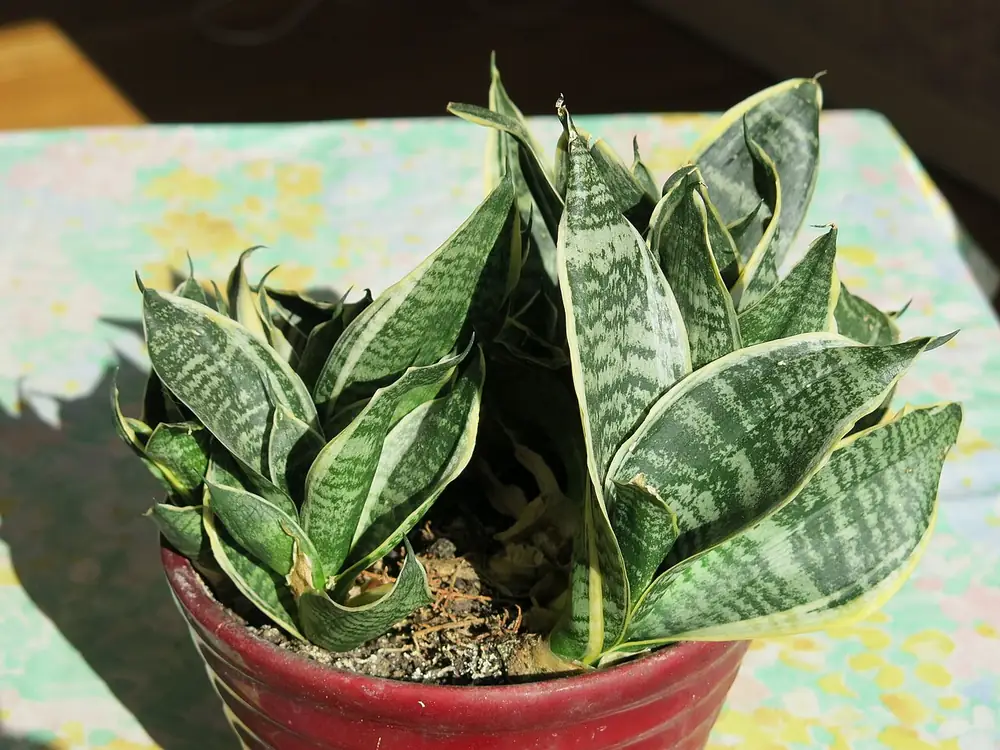
Snake plants are toxic to dogs. They contain saponins, which irritate the mouth and stomach and usually cause nausea, vomiting, and diarrhea.
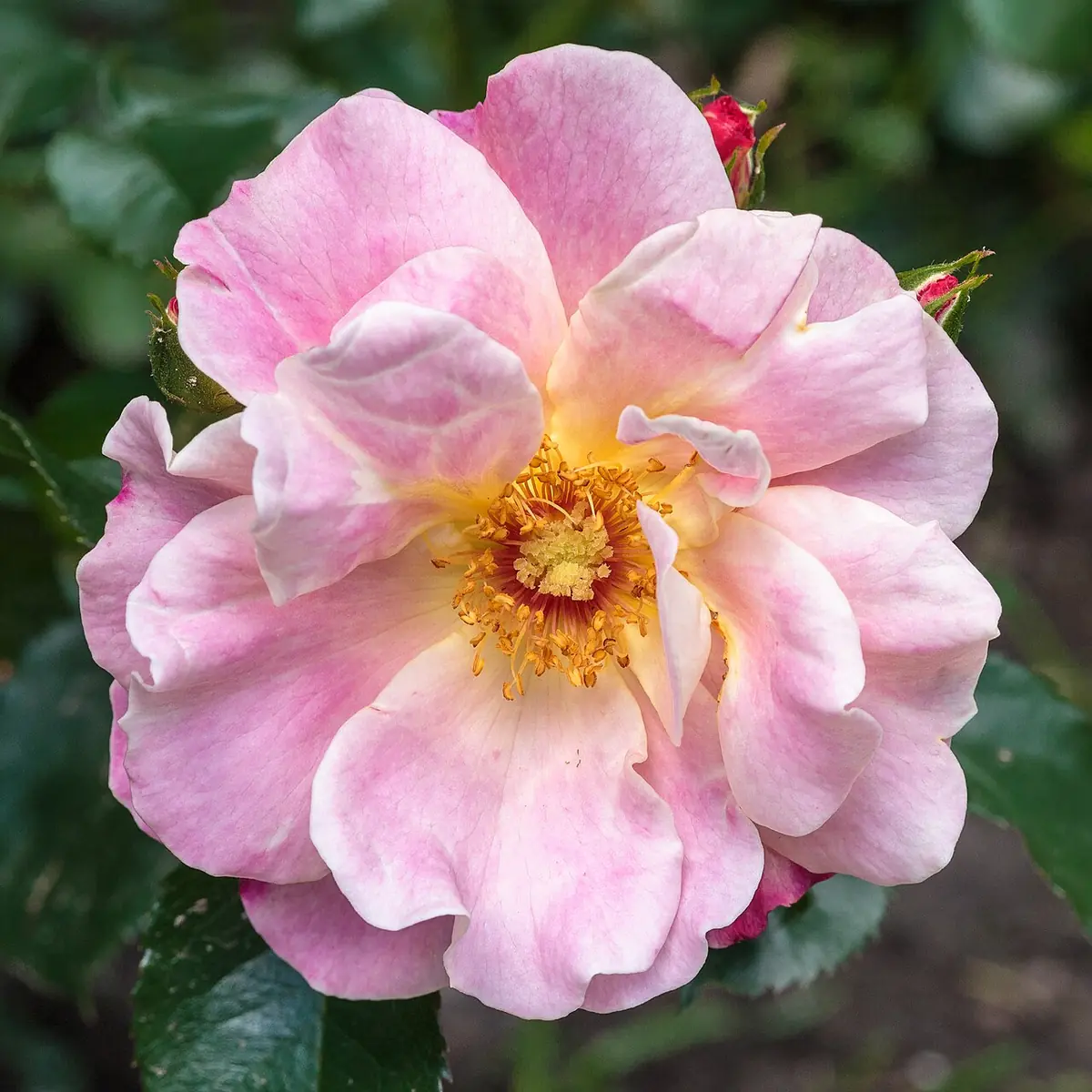
The ASPCA lists roses (Rosa species) as non-toxic to dogs, cats, and horses. The real risks are the thorns and any pesticides, fertilizers, or flower food on the plant.