Is Honeysuckle Toxic to Dogs? It Depends on the Species
It depends on the species — treat honeysuckle with caution.
True honeysuckle is not on the ASPCA's toxic plant list, and coral honeysuckle is low-risk. But the berries of Japanese, European, and bush honeysuckles are mildly toxic and can cause vomiting and diarrhea in quantity, so keep your dog from eating the berries.

- Item
- Honeysuckle
- Scientific name
- Lonicera spp.
- Also called
- Japanese honeysuckle, Coral honeysuckle, Trumpet honeysuckle, Woodbine, Gold-and-silver flower
- Category
- Plants
- Verdict
- Caution
- Symptoms start
- Onset time for honeysuckle signs in dogs is not established — the ASPCA, NC State Extension, and other sources we checked do not give a time frame for dogs, so we do not state one here.
It depends on the species — and that is exactly what makes honeysuckle a tricky question. True honeysuckle (Lonicera) does not appear on the ASPCA Animal Poison Control Center's toxic plant list for dogs, and the native coral honeysuckle is the low-risk one. But the berries of Japanese honeysuckle and the invasive bush honeysuckles are mildly toxic, and a dog that eats a lot of them can develop vomiting and diarrhea.
So the short answer is caution, not panic. A dog that sniffs the flowers or sucks a little nectar is in a very different situation from a dog that eats a cluster of berries.
If your dog ate it — what to do now
- Move your dog away from the honeysuckle and pick up fallen berries so your dog cannot eat more.
- Photograph the flowers, leaves, and berries so your vet can identify the species.
- Call your veterinarian or the ASPCA Animal Poison Control Center at (888) 426-4435 (a consultation fee may apply) and describe the species, the part eaten, and how much.
- Go to a veterinary hospital immediately for repeated vomiting, bloody diarrhea, weakness, or breathing trouble.
Do not do this
- Do not let your dog eat honeysuckle berries — they are the riskiest part of the plant.
- Do not induce vomiting unless a veterinarian tells you to.
- Do not give activated charcoal, milk, or home remedies unless a veterinarian tells you to.
- Do not assume a yellow-flowered vine is honeysuckle — Carolina Jessamine is a different, genuinely toxic lookalike.
What makes some honeysuckle toxic to dogs?
Honeysuckle is a genus of about 180 species in the family Caprifoliaceae, and they do not all carry the same risk. The berries of the risky species contain saponins, soap-like compounds that irritate the digestive system. NC State Extension lists the fruit of Japanese honeysuckle (Lonicera japonica) as the poisonous part and notes that it is toxic only if large quantities are eaten.
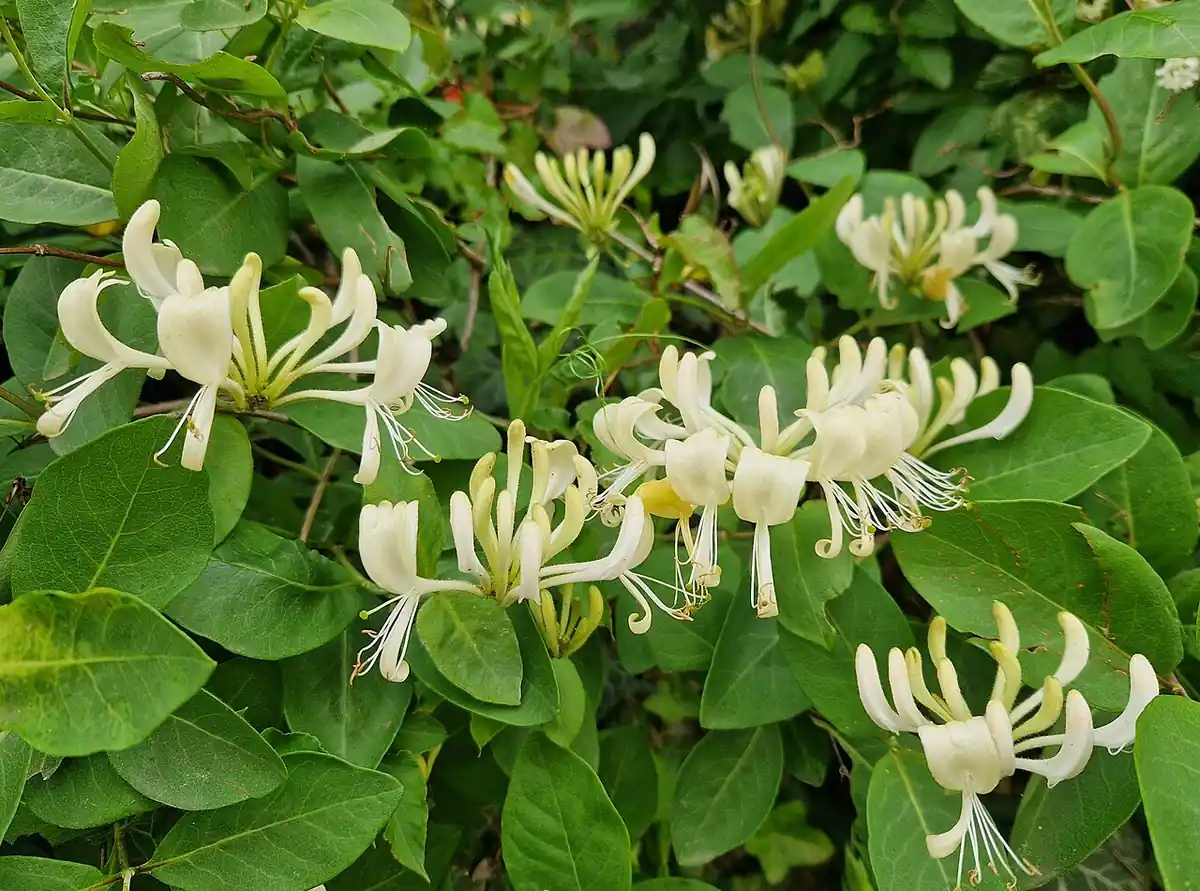
The species matters most. Japanese honeysuckle (Lonicera japonica) — white flowers aging to yellow, small black berries — is the common, highly invasive vine behind most honeysuckle warnings. European honeysuckle and the invasive bush honeysuckles (Amur, Morrow's, Tatarian) also have mildly toxic berries. The native coral or trumpet honeysuckle (Lonicera sempervirens), with red tubular flowers and almost no scent, does not appear on the ASPCA's toxic plant list. The flowers and nectar are the lowest-risk part.
- Toxic compounds in the berries: saponins, which irritate the digestive system
- Riskiest parts: the berries; flowers and nectar are least risky
- Riskiest species: Japanese, European, and bush honeysuckles; coral honeysuckle is low-risk
How much honeysuckle is dangerous for a dog?
There is no established toxic dose for honeysuckle in dogs — no number of berries and no amount in milligrams per kilogram appears in the sources we reviewed. The sources agree that this is a quantity problem, not a single-bite problem: NC State Extension says Japanese honeysuckle fruit is toxic only if large quantities are eaten, and small ingestions usually cause minimal or no harm.
A few berries will most likely cause little or no reaction, while a whole cluster is much more likely to cause vomiting or diarrhea; puppies and small dogs face more risk. The lookalike Carolina Jessamine (Gelsemium sempervirens) is different — a yellow-flowered vine containing the neurotoxic alkaloids gelsemine and sempervirine, toxic to dogs per the Pet Poison Helpline. If the vine your dog chewed has yellow flowers, tell your vet exactly which plant it was.
- No toxic dose in berries or mg/kg has been established for dogs
- A few berries usually cause little harm; a large quantity can cause vomiting and diarrhea
- Carolina Jessamine is a genuinely toxic lookalike — identify the plant first
Symptoms of honeysuckle poisoning in dogs
The symptoms of honeysuckle berry poisoning in dogs are stomach symptoms: vomiting, diarrhea, stomach pain, and loss of appetite, with lethargy if a dog has eaten a large amount. Drooling can also occur if a dog chews a lot of leaves or stems.
Serious signs like a fast heartbeat, breathing difficulty, or collapse are described for very large ingestions in some sources, but not documented for dogs in the authoritative sources we checked. Watch your dog for at least 24 hours, and call your vet if vomiting or diarrhea continues, your dog refuses food and water, or your dog seems weak.
- Common signs: vomiting, diarrhea, stomach pain, loss of appetite
- Other signs: drooling, lethargy
- Emergency signs: repeated vomiting, bloody diarrhea, weakness, breathing trouble
What to do if your dog eats honeysuckle
Move your dog away from the honeysuckle and stop it eating more berries, leaves, or stems. If you can, identify the plant: photograph the flowers, leaves, and berries, and note whether the flowers are white turning yellow (Japanese honeysuckle), red and tubular (coral honeysuckle), or yellow (which may be Carolina Jessamine).
Call your veterinarian or the ASPCA Animal Poison Control Center at (888) 426-4435 (a consultation fee may apply). Tell them which species it was if you know, which part your dog ate, roughly how much, when it happened, and your dog's weight and age. Most berry ingestions need only monitoring and supportive care, but your vet can judge the exposure against your dog's size. If your dog is vomiting repeatedly, has bloody diarrhea, seems weak, or has trouble breathing, go to a veterinary hospital immediately — and take a photo of the plant with you.
- Move your dog away from the plant and pick up fallen berries
- Call your vet or ASPCA Animal Poison Control at (888) 426-4435 (a consultation fee may apply)
- Go to a veterinary hospital immediately for repeated vomiting, bloody diarrhea, weakness, or breathing trouble
How to keep your dog safe around honeysuckle
Know which honeysuckle is growing in your yard. Coral honeysuckle, the native vine with red tubular flowers and almost no scent, is the low-risk one. Japanese honeysuckle — white flowers aging to yellow, a strong sweet scent, small black berries — is the one to manage, and it is highly invasive. Bush honeysuckles are upright shrubs with red berries, not vines.
If you keep a risky honeysuckle, fence it off or prune it so the berries hang out of your dog's reach, and rake up fallen berries in late summer and autumn. Teach a leave-it cue for walks, because Japanese honeysuckle grows wild along fences and paths. if unsure which vine you have, ask your local extension service.
- Identify the species: red tubular flowers mean coral honeysuckle (low-risk); white-to-yellow fragrant flowers mean Japanese honeysuckle
- Fence off or prune risky honeysuckle so berries hang out of reach
Honeysuckle products in the home: vines, berries, and extracts
In the garden, the risk is the living vine and its berries — there is no common household honeysuckle product that poisons dogs. Honeysuckle appears in some teas, syrups, and herbal products for people, and in a few pet products as an extract, but those are made from the flowers at controlled levels, not the same as eating berries off a vine. Do not give your dog honeysuckle tea or extract.
Dried flowers sold for tea are the flowers, not the berries, so they carry the lowest-risk part — but they are still not a dog treat, and no safe amount for dogs has been established. Flowers and nectar in passing are low-risk; berries are the part to prevent.
- Garden vine and berries: the real risk — berries in quantity cause vomiting and diarrhea
- Teas, syrups, and extracts: made from flowers at controlled levels; keep them away from your dog
Safe alternatives to honeysuckle
If you want a flowering climber without the berry worry, several common plants are listed as safe for dogs. Roses are listed as safe for dogs by the ASPCA and climb well on a trellis, although their thorns can injure a mouth or paw. Sunflowers are also listed as safe, and hibiscus is listed as non-toxic to dogs by the ASPCA, even though many websites call it toxic.
Stick with the plants above: some climbers that look safe are not on the ASPCA's non-toxic list. Check the ASPCA's list before you buy, and keep the tag.
- Roses: safe for dogs (ASPCA)
- Sunflowers: non-toxic to dogs (ASPCA)
- Hibiscus: non-toxic to dogs (ASPCA)
Symptoms to watch for
- Vomiting
- Diarrhea
- Stomach pain
- Loss of appetite
- Drooling
- Lethargy
- Weakness
- Difficulty breathing (rare, emergency)
- Irregular heartbeat (rare, emergency)
The commonly reported signs after a dog eats honeysuckle berries are stomach symptoms: vomiting, diarrhea, stomach pain, and loss of appetite. More serious signs are described in some sources for very large ingestions but are not documented for dogs in the authoritative sources we checked.
Safe alternatives
- Roses — Listed as non-toxic to dogs by the ASPCA; thorns can injure a mouth or paw.
- Sunflowers — Listed as non-toxic to dogs by the ASPCA and give a tall, sunny climbing look.
- Hibiscus — Listed as non-toxic to dogs by the ASPCA, despite many sites calling it toxic.
What about cats? True honeysuckle (Lonicera) does not appear on the ASPCA's toxic plant list for cats either, so the same species-by-species caution applies: the native coral honeysuckle is the low-risk one, while the berries of Japanese and bush honeysuckles can cause stomach upset in quantity. Cats that chew plants should be kept away from honeysuckle berries just like dogs.
Frequently asked questions
Can dogs eat honeysuckle?
It depends on the species and the part. True honeysuckle (Lonicera) does not appear on the ASPCA's toxic plant list, and the flowers and nectar of Japanese honeysuckle are widely described as harmless in small amounts. But the berries of Japanese, European, and bush honeysuckles contain saponins and can cause vomiting and diarrhea if a dog eats a lot of them. Do not let your dog eat honeysuckle berries.
Is Japanese honeysuckle toxic to dogs?
Japanese honeysuckle (Lonicera japonica) is the species behind most honeysuckle warnings. Its berries are mildly toxic: NC State Extension lists the fruit as the poisonous part and notes it is toxic only if large quantities are eaten. A few berries will usually cause little or no harm, but a dog that eats a lot of berries can develop vomiting, diarrhea, and stomach pain, so call your vet.
Is coral honeysuckle safe for dogs?
Coral honeysuckle (Lonicera sempervirens), the native trumpet honeysuckle with red tubular flowers, is not on the ASPCA's toxic plant list for dogs, cats, or horses. It is the low-risk honeysuckle. Even so, a dog that eats a large quantity of any plant material can get mild stomach upset, so do not encourage chewing and call your vet if symptoms appear.
What should I do if my dog ate honeysuckle berries?
Move your dog away from the plant and stop it eating more berries. Note which species it was if you can, which part your dog ate, and roughly how much. Call your veterinarian or the ASPCA Animal Poison Control Center at (888) 426-4435 (a consultation fee may apply) and describe what happened. If your dog is vomiting repeatedly, has diarrhea, or seems lethargic, go to a veterinary hospital.
Sources
- ASPCA Poison Control — Toxic and Non-toxic Plants
- NC State Extension — Lonicera japonica (Japanese Honeysuckle)
- The Pollinator Patch Garden — No, True Honeysuckle Is Not on the ASPCA Toxic List
- The Pollinator Patch Garden — No, Coral Honeysuckle Is Not Toxic to Dogs
Related guides
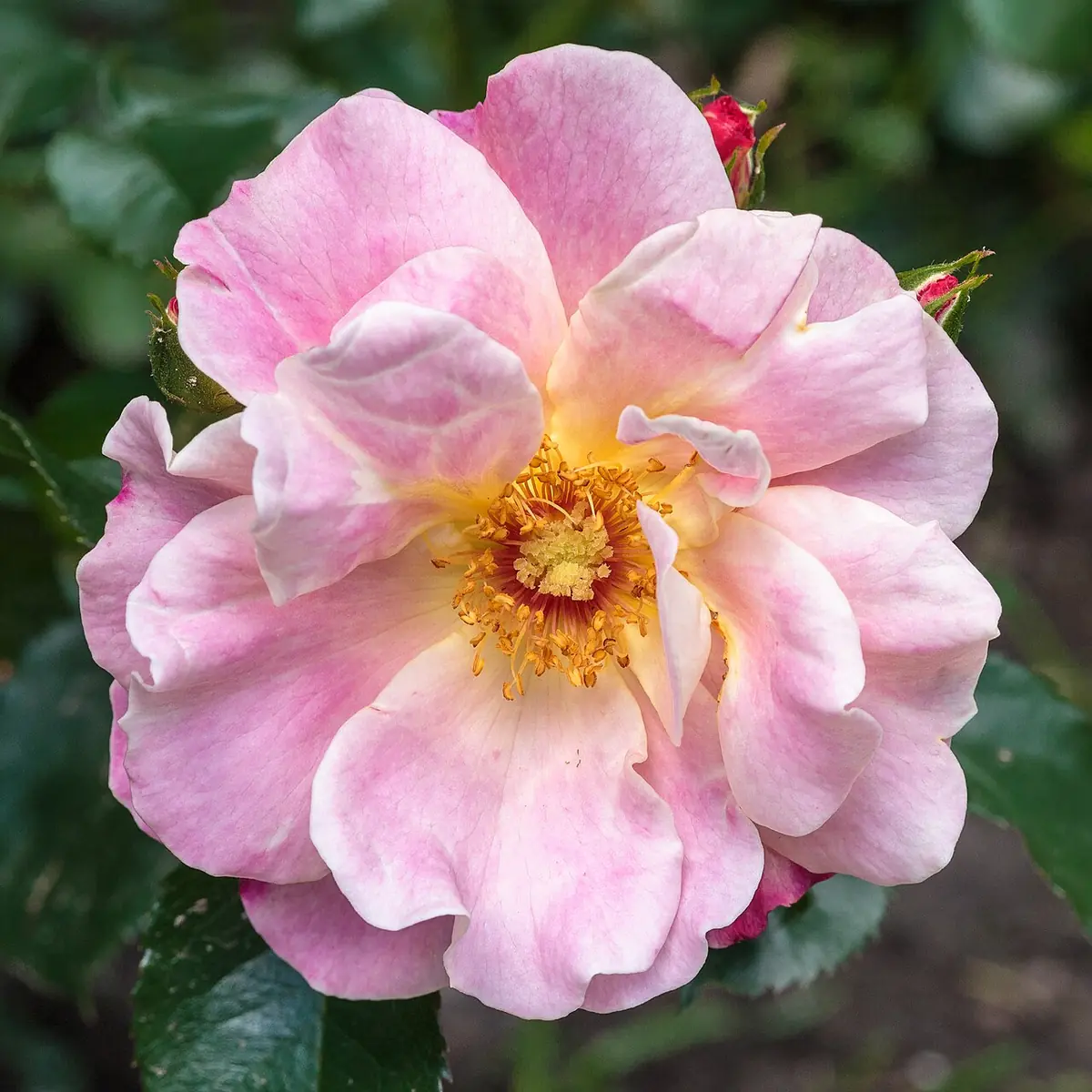
The ASPCA lists roses (Rosa species) as non-toxic to dogs, cats, and horses. The real risks are the thorns and any pesticides, fertilizers, or flower food on the plant.

Sunflowers are not toxic to dogs. The ASPCA lists them as non-toxic, and the seeds are safe too — but only plain, shelled, and unsalted, in small amounts.
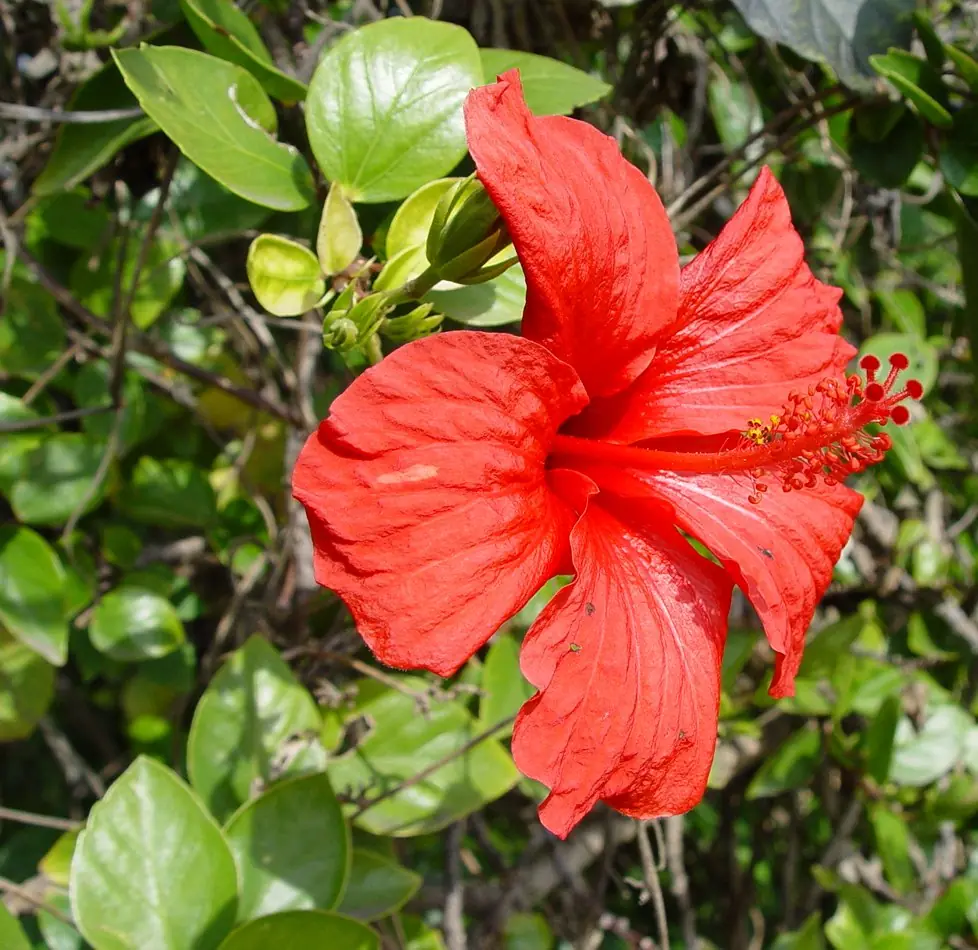
The ASPCA lists hibiscus (Hibiscus syriacus) as non-toxic to dogs, cats, and horses, and veterinary toxicology databases list tropical hibiscus (Hibiscus rosa-sinensis) the same way. A dog that nibbles a flower is not expected to be poisoned, though eating plant material can still cause mild stomach upset.
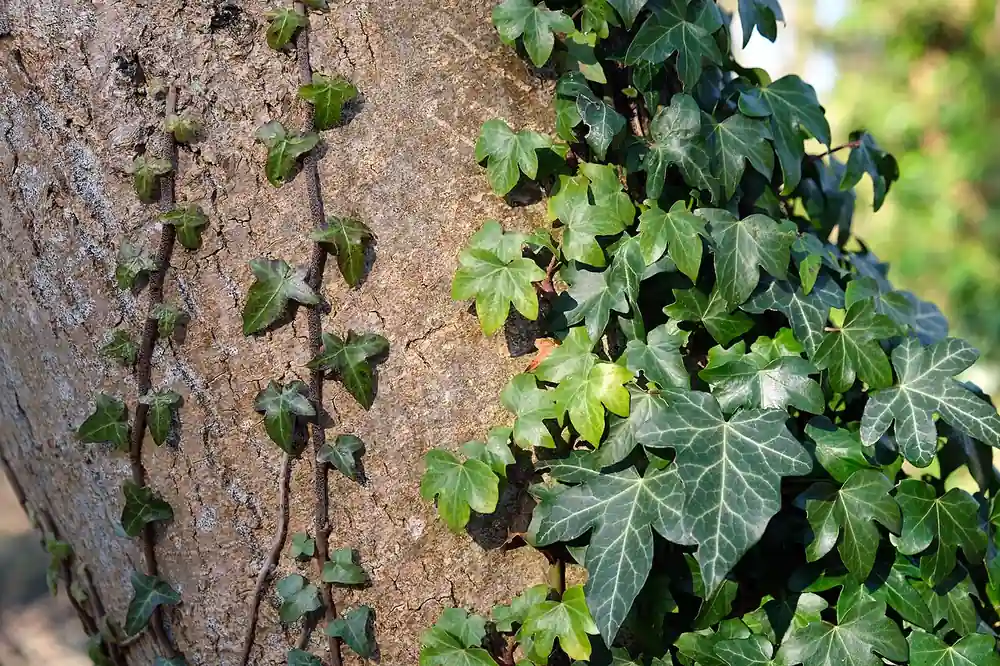
The ASPCA lists English ivy as toxic to dogs. Its leaves contain triterpenoid saponins that cause vomiting, abdominal pain, drooling, and diarrhea. Pet Poison Helpline rates the toxicity as mild, but any dog that eats it should be checked by a veterinarian.